COT Report vs Traders of Financial Futures: Which Data Set Should You Trust for Forex Trading?
If you have spent any time analyzing futures market data, you have likely encountered the Commitments of Traders (COT) report. It is one of the most widely used tools for gauging market sentiment. But what happens when you discover there is not just one COT report, but several versions? The COT report vs Traders of Financial Futures debate is a common point of confusion for intermediate forex traders. Both reports come from the same source—the Commodity Futures Trading Commission (CFTC)—but they tell very different stories about who is holding positions in the market.
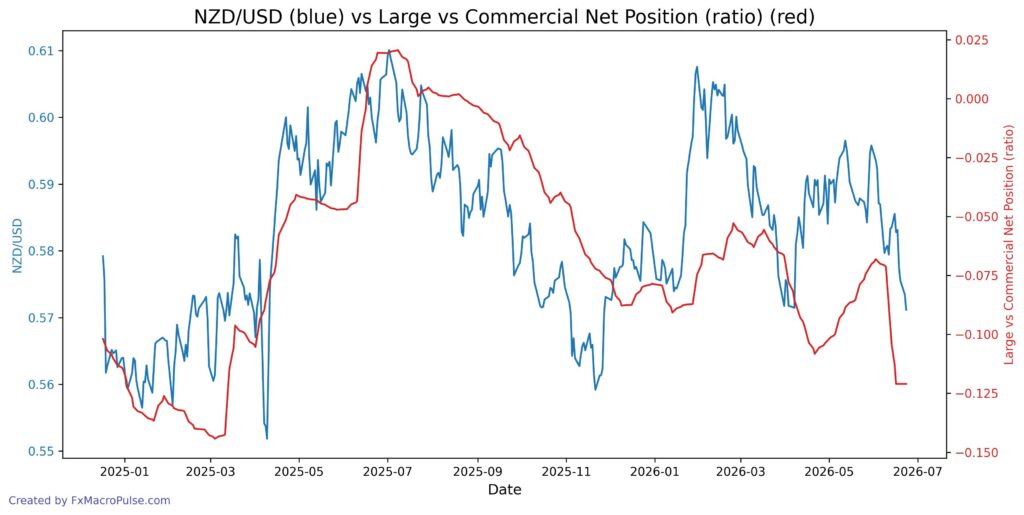
Understanding the difference between COT report and Traders of Financial Futures is critical if you want to avoid misreading market signals. The legacy COT report lumps traders into just two categories: commercial and non-commercial. The TFF report, on the other hand, breaks the data into four specific groups: Dealer/Intermediary, Asset Manager/Institutional, Leveraged Funds, and Other Reportables. This granularity can completely change how you interpret a bullish or bearish signal.
In this article, you will learn exactly how these two reports differ, why the TFF report was created, and how to use each one for COT report forex trading analysis. You will also discover which report is better suited for currency futures analysis and how to avoid common interpretation mistakes. By the end, you will have a clear framework for deciding when to use the legacy COT versus the TFF for your futures market analysis.
What Is the Legacy COT Report and How Does It Categorize Traders?
The legacy COT report, also known as the “traditional” or “standard” COT, has been published by the CFTC since 1992. It provides a breakdown of each Tuesday’s open interest for futures and options markets where 20 or more traders hold positions equal to or above the CFTC’s reporting levels. According to the CFTC, the legacy report separates reportable traders into only two categories: “commercial” and “non-commercial.”
Commercial vs. Non-Commercial: The Original Two-Bucket System
In the legacy COT report, a commercial trader is defined as an entity that uses futures contracts for hedging purposes. For example, a wheat farmer selling wheat futures to lock in a price is considered a commercial trader. A non-commercial trader is a speculator—someone trading futures purely for profit, with no underlying exposure to the commodity. This binary system worked reasonably well for physical commodities like corn, oil, and gold.
However, this system breaks down when applied to financial futures like currency pairs (e.g., EUR/USD, USD/JPY) and interest rate products. A large investment bank that hedges currency exposure for clients might be classified as “commercial,” while a hedge fund speculating on the same currency might be “non-commercial.” The problem? Both are financial institutions, and their trading behavior can look very similar. The legacy report gives you no way to distinguish between a bank hedging client flow and a leveraged fund making a directional bet.
What Is the Traders in Financial Futures (TFF) Report?
The Traders in Financial Futures (TFF) report was announced by the CFTC on July 22, 2010. It was created specifically to address the shortcomings of the legacy COT report when applied to financial futures markets. According to the CFTC’s explanatory notes, the TFF “builds on improvements to transparency implemented in 2009 that disaggregated data in the CFTC’s weekly Commitments of Traders (COT) Reports.”
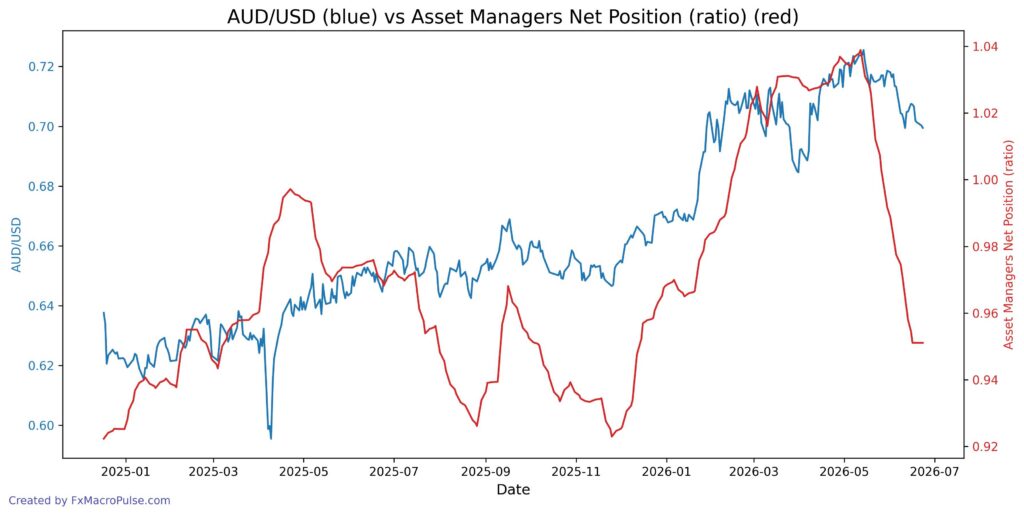
The TFF report separates large traders in financial markets into four categories: Dealer/Intermediary, Asset Manager/Institutional, Leveraged Funds, and Other Reportables. Like the legacy COT, the TFF is based on the same confidential daily large-trader data collected by the CFTC for market surveillance. The TFF is published side-by-side with the legacy COT report, meaning you can compare both data sets for the same market on the same release date.
The Four TFF Trader Classifications Explained
The TFF report divides financial futures market participants into the “sell side” and “buy side.” This functional division provides much clearer insight into who is actually driving price movements. Here is how each category is defined:
- Dealer/Intermediary: This group includes banks, broker-dealers, and other financial intermediaries that primarily facilitate client transactions. They are typically on the “sell side” of the market. Their positions often reflect hedging of client order flow rather than directional speculation.
- Asset Manager/Institutional: This category includes pension funds, endowments, insurance companies, mutual funds, and other institutional investors. They are on the “buy side” and typically take longer-term positions based on fundamental analysis.
- Leveraged Funds: According to the Office of Financial Research, this category “are typically hedge funds and various types of money managers, including registered commodity trading advisors (CTAs), registered commodity pool operators (CPOs), and unregistered funds identified by CFTC.” These traders are often short-term oriented and can flip positions rapidly.
- Other Reportables: This catch-all category includes any reportable trader that does not fit into the first three groups. It is the smallest category and often has the least predictive power for market analysis.
COT Report vs Traders of Financial Futures: What Are the Core Differences?
Now that you understand the basics of both reports, let’s break down the specific difference between COT report and Traders of Financial Futures. These differences are not just academic—they have real implications for how you interpret market data.
Number of Trader Categories
The most obvious difference is the number of trader classifications. The legacy COT uses two categories (commercial and non-commercial). The TFF uses four categories (Dealer, Asset Manager, Leveraged Funds, and Other). This means the TFF provides three times the granularity for financial futures markets. If you are trading currency futures, the TFF gives you a much clearer picture of whether a large long position is being held by a hedge fund (likely speculative and short-term) or by an asset manager (likely strategic and longer-term).
Applicability to Financial vs. Physical Markets
The legacy COT report was designed for physical commodities. It works well for analyzing markets like crude oil, wheat, or copper where the commercial/non-commercial distinction is meaningful. The TFF report was specifically designed for financial futures—currency futures, interest rate futures, equity index futures, and VIX futures. If you are trading forex futures, the TFF is almost always more relevant than the legacy COT.
Data Granularity and Classification Methodology
According to the CFTC, the TFF report “separates large traders in the financial markets into the following four categories: Dealer/Intermediary; Asset Manager/Institutional; Leveraged Funds; and Other Reportables.” The legacy report, by contrast, separates traders only into “commercial” and “non-commercial” categories. The TFF uses a functional classification system based on the trader’s primary business activity, while the legacy COT uses a hedging-based classification system.
This functional approach is more accurate for financial futures because many financial institutions engage in both hedging and speculative activities. A large bank might hedge its own balance sheet while also speculating on currency movements. The legacy COT would force this bank into one category. The TFF can assign it to the Dealer/Intermediary category based on its primary business function, providing a more accurate representation of market dynamics.
How Should Forex Traders Choose Between the COT and TFF Reports?
For COT report forex trading, the choice between the legacy COT and the TFF depends on what you are trying to analyze. Here is a practical framework for deciding which report to use.
When to Use the Legacy COT Report
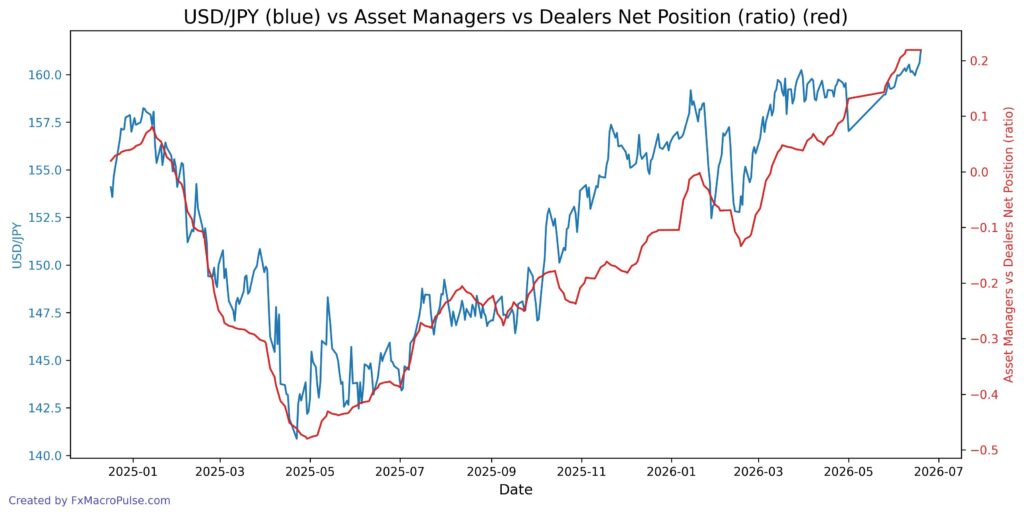
Use the legacy COT report when you are analyzing physical commodities that are correlated with forex pairs. For example, if you are trading USD/CAD and want to understand positioning in crude oil futures, the legacy COT report is more appropriate because crude oil is a physical commodity. Similarly, if you are trading AUD/USD and want to analyze gold futures, the legacy COT gives you the commercial/non-commercial breakdown that is meaningful for physical markets.
The legacy COT is also useful for historical analysis. Because the TFF report only started in 2010, you have a much longer data history with the legacy COT. If you are backtesting a strategy over 20 years, you will need to use the legacy COT data.
When to Use the TFF Report
Use the TFF report when you are directly analyzing currency futures (e.g., EUR/USD, GBP/USD, JPY/USD futures on the CME). The TFF’s four-category breakdown is far more informative for financial futures. For example, if the legacy COT shows a large net long position in EUR futures held by “non-commercial” traders, you cannot tell if that position is held by hedge funds (which might dump it quickly) or by asset managers (which might hold it for months). The TFF reveals this distinction instantly.
The TFF is also better for identifying potential turning points. According to the CFTC, the Dealer/Intermediary category typically represents the “sell side.” When Dealers are heavily short, it often means they are hedging client demand for long positions—a contrarian signal that prices may reverse. The legacy COT cannot provide this level of insight.
What Are the Limitations of the COT and TFF Reports?
Both reports have significant limitations that intermediate traders must understand. Neither report is a crystal ball, and relying on either one without context can lead to poor trading decisions.
Limitations of the Legacy COT Report
The legacy COT report’s biggest limitation is its binary classification system. As noted earlier, a large financial institution can be classified as “commercial” even when it is engaging in speculative activity. This creates noise in the data. Additionally, the legacy COT does not distinguish between different types of speculators. A pension fund (long-term, low leverage) and a hedge fund (short-term, high leverage) are both lumped into the “non-commercial” category, even though their trading behavior is completely different.
Another limitation is that the COT report is published with a three-day lag. The data reflects positions as of Tuesday, but the report is released on Friday. By the time you see the data, the market may have already moved. The TFF report has the same lag issue.
Limitations of the TFF Report
The TFF report is only available for financial futures markets. If you trade forex through spot markets (the vast majority of retail forex trading), neither the COT nor the TFF directly reflects your market. Both reports only cover futures contracts traded on exchanges like the CME. Spot forex is an over-the-counter market with no centralized reporting. However, because futures and spot prices are highly correlated, the TFF data can still provide useful sentiment signals.
Another limitation is that the TFF categories can still be ambiguous. For example, a large hedge fund that also manages pension fund money might be classified as “Asset Manager/Institutional” in some cases and “Leveraged Funds” in others. The CFTC’s classification process is not transparent, and traders must accept the agency’s judgment.
How to Combine COT and TFF Data for Better Forex Analysis
Rather than choosing between the COT report and the TFF report, the most sophisticated approach is to use both together. Each report provides a different lens on the same underlying data.
Cross-Referencing for Confirmation
Start by looking at the TFF report to understand the detailed breakdown of who is long and who is short. Then, cross-reference with the legacy COT to see how those positions map to the commercial/non-commercial framework. If both reports show the same dominant positioning (e.g., commercial traders are net long, and Dealers are net long), you have a strong signal. If the reports contradict each other, it may indicate that the market is in a transitional phase.
For example, if the legacy COT shows non-commercial traders heavily long EUR futures, but the TFF shows that most of those long positions are held by Leveraged Funds (hedge funds) rather than Asset Managers, you know the positioning is speculative and potentially fragile. This insight would make you more cautious about following the crowd.
Using TFF for Entry Timing and COT for Trend Analysis
Use the legacy COT report to identify long-term trends. The commercial/non-commercial divergence is a well-known indicator of major market turning points. When commercial traders (the “smart money”) are heavily positioned opposite to non-commercial traders (the “dumb money”), a reversal is often near.
Use the TFF report to refine your entry timing. For instance, if the legacy COT shows a bullish setup for USD/JPY, check the TFF to see if Dealers are also positioned bullishly. If Dealers are heavily short while Asset Managers are long, it may indicate that the bullish trend is overextended and due for a pullback. You can then wait for that pullback before entering.
Key Takeaways
- The legacy COT report uses two trader categories (commercial and non-commercial), while the TFF report uses four categories (Dealer/Intermediary, Asset Manager/Institutional, Leveraged Funds, and Other Reportables).
- The TFF report was launched on July 22, 2010, specifically to improve transparency in financial futures markets like currency futures and interest rate futures.
- For forex trading, the TFF report is generally more useful because it distinguishes between hedge funds (Leveraged Funds) and institutional investors (Asset Managers), providing clearer sentiment signals.
- Both reports have a three-day lag (data as of Tuesday, released on Friday), so they are best used for medium-term trend analysis rather than short-term timing.
- Neither report covers spot forex markets directly, but futures data is highly correlated with spot prices, making both reports valuable for sentiment analysis.
- For the most robust analysis, use the legacy COT to identify long-term trends and the TFF to refine entry and exit timing based on the specific trader categories.
For a deeper dive into applying these reports to your trading, check out our How to Use the COT Report for Forex Trading: A Complete Guide and our Traders in Financial Futures (TFF) in Forex: A Complete Guide for Currency Traders.
🔒 Trade Like an Institution, Not a Retail Guessing Game.
Retail traders rely on lagging technical indicators. Institutional traders rely on fundamental macro shifts. FX Macro Pulse bridges the gap, giving you the institutional-grade economic intelligence you need to predict currency trends before they happen.