Bond Yield Differentials Forex: The Complete Guide to Yield Spreads Trading
Have you ever watched a currency pair like EUR/USD suddenly spike or crash, seemingly without a clear catalyst in the news? While headlines focus on central bank speeches and employment data, a quieter, more powerful force is often driving these movements: the bond market. For intermediate forex traders, understanding bond yield differentials forex strategies is the missing piece of the puzzle. This guide will explain how government bond yields act as the invisible hand guiding currency valuations, and how you can use yield spreads trading to anticipate major market shifts.
What Are Bond Yield Differentials in Forex?
At its core, a bond yield differential—often called a yield spread—is the difference between the yields of two different countries’ government bonds. For example, if the 10-year U.S. Treasury bond yields 4.5% and the 10-year German Bund yields 2.5%, the yield differential is 2.0% (or 200 basis points) in favor of the U.S. dollar. This metric is the foundation of interest rate differentials forex analysis.
According to Investopedia, the general rule is that when the yield spread widens in favor of a country’s bonds, its currency tends to strengthen. The spreads of both the five- and 10-year bond yields can be used to gauge currencies. The logic is straightforward: global investors seek the highest returns for the lowest risk. When a country offers higher bond yields relative to another, capital flows into that country to capture the extra return, boosting demand for its currency in the process.
How Bond Yields Differ from Central Bank Interest Rates
Many traders confuse bond yields with central bank policy rates. While related, they are not the same. A central bank sets the short-term interest rate (like the Fed Funds Rate), which directly influences overnight lending. Bond yields, however, are market-determined. They reflect expectations about future inflation, economic growth, and central bank policy over longer time horizons. This makes forex yield analysis using bond yields more forward-looking than simply watching rate decisions.
The Mechanics: How Yield Differentials Drive Currency Pairs
The relationship between bond yields and forex is rooted in the concept of capital flows. As noted in the FXNX guide on bond yields and forex, government bond yields are the “invisible strings” pulling currencies in their wake. When a country’s bond yields rise relative to another’s, it signals that the economy is strengthening or that interest rates are expected to increase. This attracts foreign investment, which requires buying the local currency, pushing its value higher.
The Carry Trade Connection
One of the most direct applications of bond yield differentials forex strategies is the carry trade. This involves borrowing a currency with a low yield (the funding currency) and buying a currency with a high yield (the target currency). The profit comes from the interest rate differential. While the carry trade traditionally uses central bank rates, bond yields provide a more accurate picture of the actual returns available in the market. A widening spread in favor of the target currency strengthens the carry trade’s appeal, potentially driving further currency appreciation.
Yield Spreads as Leading Indicators
Investopedia explicitly states that bond spreads serve as a leading indicator for forex. This means they can signal currency movements before they happen. For instance, if the yield spread between the U.S. and Germany begins to widen in favor of the U.S. dollar, it often precedes a rally in USD/JPY or EUR/USD declines. This predictive power makes bond yields currency pairs analysis invaluable for timing entries and exits.
How to Analyze Bond Yield Differentials for Forex Trading
To effectively use yield spreads trading, you need a systematic approach. Here is a step-by-step method for incorporating bond yield analysis into your forex strategy.
Step 1: Identify the Relevant Bond Yields
For each major currency pair, focus on the 10-year government bond yields of the two countries involved. The 10-year yield is the most widely watched benchmark because it reflects long-term economic expectations. For example:
- EUR/USD: Compare the German 10-year Bund yield vs. the U.S. 10-year Treasury yield.
- GBP/USD: Compare the UK 10-year Gilt yield vs. the U.S. 10-year Treasury yield.
- USD/JPY: Compare the U.S. 10-year Treasury yield vs. the Japan 10-year Government Bond (JGB) yield.
Step 2: Track the Spread Over Time
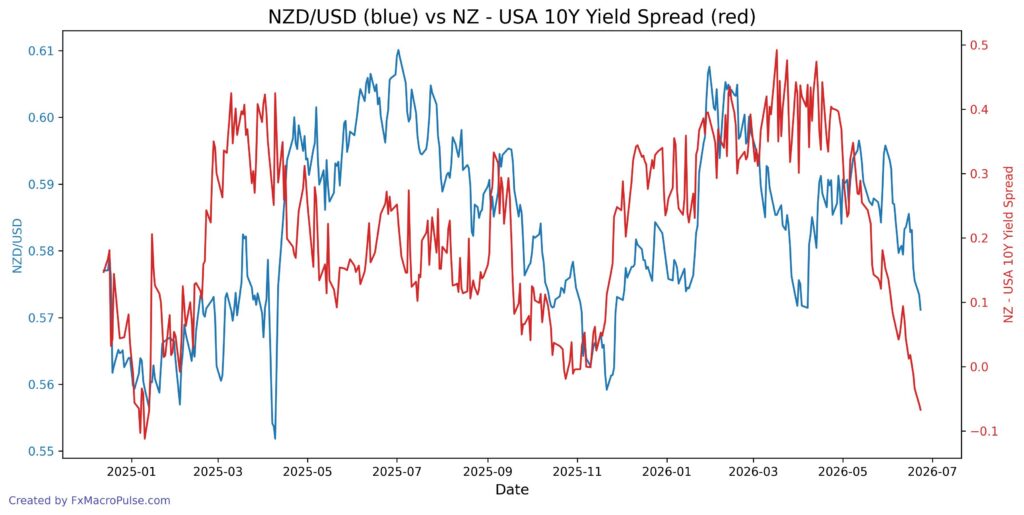
Don’t just look at the absolute spread value. Monitor the direction and velocity of the spread change. A spread that is widening rapidly suggests increasing divergence between the two economies. The Orbex blog on bond yields emphasizes that bonds have a “significant role in determining the direction of currencies and exchange rates.” A consistent widening trend in the spread often correlates with a trending currency pair.
Step 3: Compare Spreads to Price Action
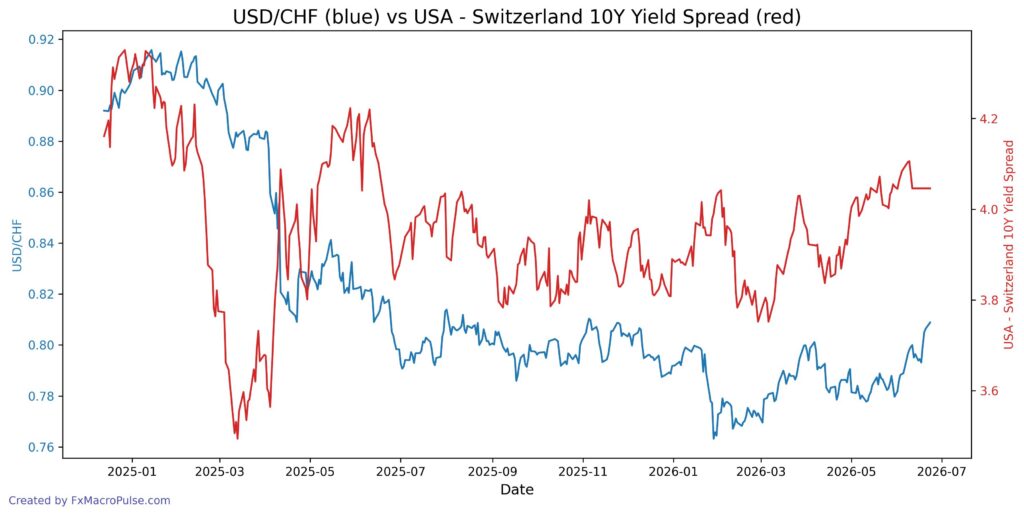
Plot the yield spread as an overlay on your currency pair chart. Look for divergences or confirmations. For instance, if the yield spread is widening in favor of the dollar (suggesting USD strength) but EUR/USD is rising, this divergence could signal a potential reversal. Conversely, if both are moving in the same direction, the trend has strong fundamental backing.
Step 4: Use the 5-Year Yield for Shorter Signals
While the 10-year yield is the standard, the 5-year bond yield can offer more sensitive signals for medium-term trades. According to Investopedia, the spreads of both the five- and 10-year bond yields can be used to gauge currencies. The 5-year yield is more responsive to near-term interest rate expectations, making it useful for trades with a 1-3 month horizon.
Practical Example: Trading EUR/USD with Yield Spreads
Let’s examine a hypothetical scenario to illustrate how bond yield differentials affect forex pairs in practice. This example is based on the principles outlined in the FXNX guide.
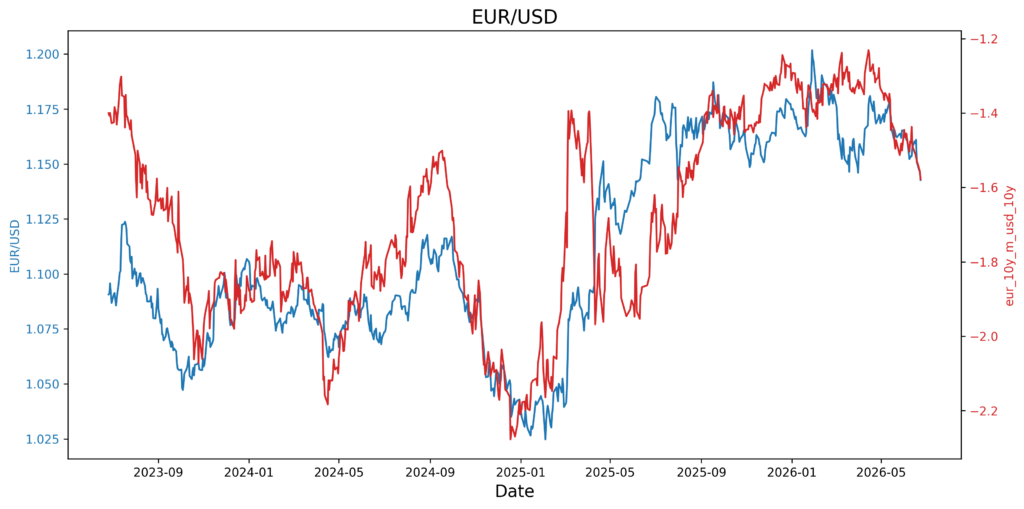
Scenario: In early 2024, the U.S. 10-year Treasury yield is at 4.5%, while the German 10-year Bund yield is at 2.3%. The spread is 2.2% in favor of the U.S. dollar. Over the next three months, U.S. economic data surprises to the upside, pushing the Treasury yield to 5.0%. Meanwhile, Eurozone data weakens, causing the Bund yield to fall to 2.0%. The spread has now widened to 3.0%.
Expected Forex Impact: As the spread widens in favor of the U.S. dollar, capital flows into USD-denominated assets. The EUR/USD pair should decline (USD strengthens). A trader using trading EUR/USD with yield spreads would have entered a short position early in the trend, riding the move as the spread expanded.
Confirmation: The trader would look for the EUR/USD price to break below key support levels as the spread crosses major thresholds (e.g., 250 basis points). This confluence of yield analysis and technical analysis increases the probability of a successful trade.
Limitations and Risks of Yield Spread Trading
While powerful, bond yield differentials forex strategies are not infallible. Understanding the limitations is crucial for using yield differentials to predict currency movements effectively.
Risk Sentiment Can Override Fundamentals
During periods of extreme market stress (e.g., a global financial crisis), investors flee to safe-haven currencies like the U.S. dollar and Japanese yen, regardless of yield differentials. In 2008, the dollar strengthened even as U.S. yields plummeted because of its safe-haven status. The FRED Blog notes that the link between interest rates and exchange rates is well-established, but other factors can temporarily break the correlation.
Central Bank Intervention
Central banks can directly intervene in forex markets or use unconventional monetary policy (like quantitative easing) to suppress bond yields. This artificially distorts the yield spread and can lead to false signals. The Bank of Japan, for instance, has historically capped JGB yields, creating a persistent yield differential that doesn’t always translate into yen weakness.
Lagging Correlation
While bond spreads are leading indicators, the timing of the currency move is not always immediate. The spread can widen for weeks before the currency pair reacts. Patience and confirmation from price action are essential. The FXNX guide warns that the relationship is powerful but not always instantaneous, requiring traders to integrate this analysis with other tools.
Liquidity and Data Sourcing
Bond yields are less liquid than forex pairs, especially for smaller countries. Bid-ask spreads on bonds can be wide, and the yields you see on your chart may be based on the last trade rather than the current market. Always use reliable data sources like Bloomberg, Reuters, or central bank websites for accurate yield information.
Key Takeaways
- Bond yield differentials (the spread between two countries’ 10-year government bond yields) are a powerful leading indicator for forex markets. A widening spread in favor of a country typically strengthens its currency.
- Focus on the 10-year yield for long-term trends and the 5-year yield for medium-term signals. Both can be used to gauge currency direction.
- The carry trade is the most direct application: borrow low-yielding currencies and buy high-yielding ones. Monitor bond yield spreads to validate carry trade opportunities.
- Yield spreads are not infallible. Safe-haven flows during risk-off events, central bank intervention, and timing lags can break the correlation. Always use yield analysis in conjunction with technical and sentiment indicators.
- For a practical start, plot the yield spread of your chosen currency pair (e.g., U.S. 10-year minus German 10-year for EUR/USD) and compare it to the pair’s price action. Look for divergences and confirmations to time your trades.