Macro Analysis
**USD/CAD Daily Analysis: Price vs. Macroflow Index**
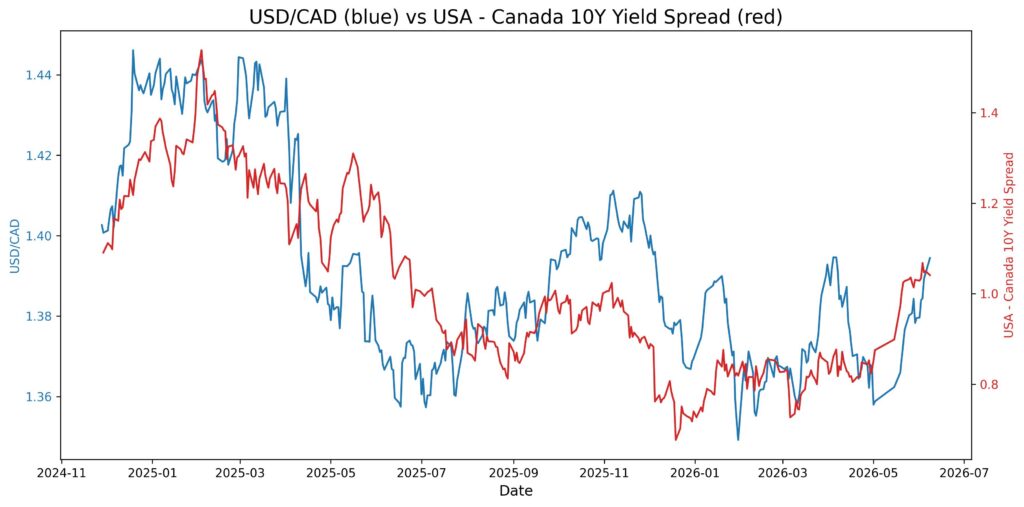
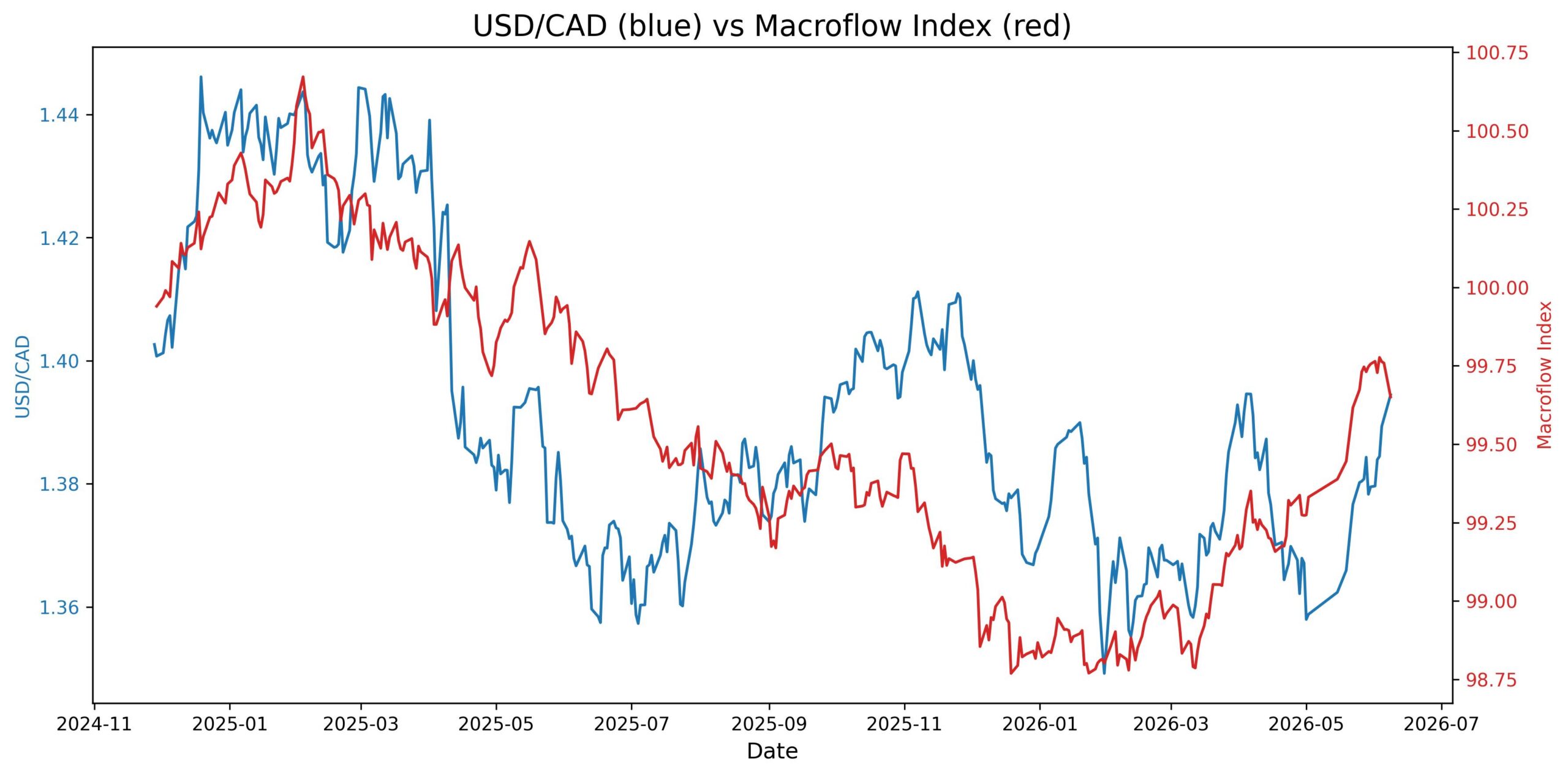
From late 2024 through early 2025, USD/CAD trended higher, peaking near 1.4460 in December 2024. The Macroflow Index also rose during this period, but its gains were more muted. This created a divergence – the pair outpaced the index, suggesting the rally in USD/CAD was partly driven by factors not fully captured by the yield spread, oil, and gold (e.g., risk sentiment, trade tensions).
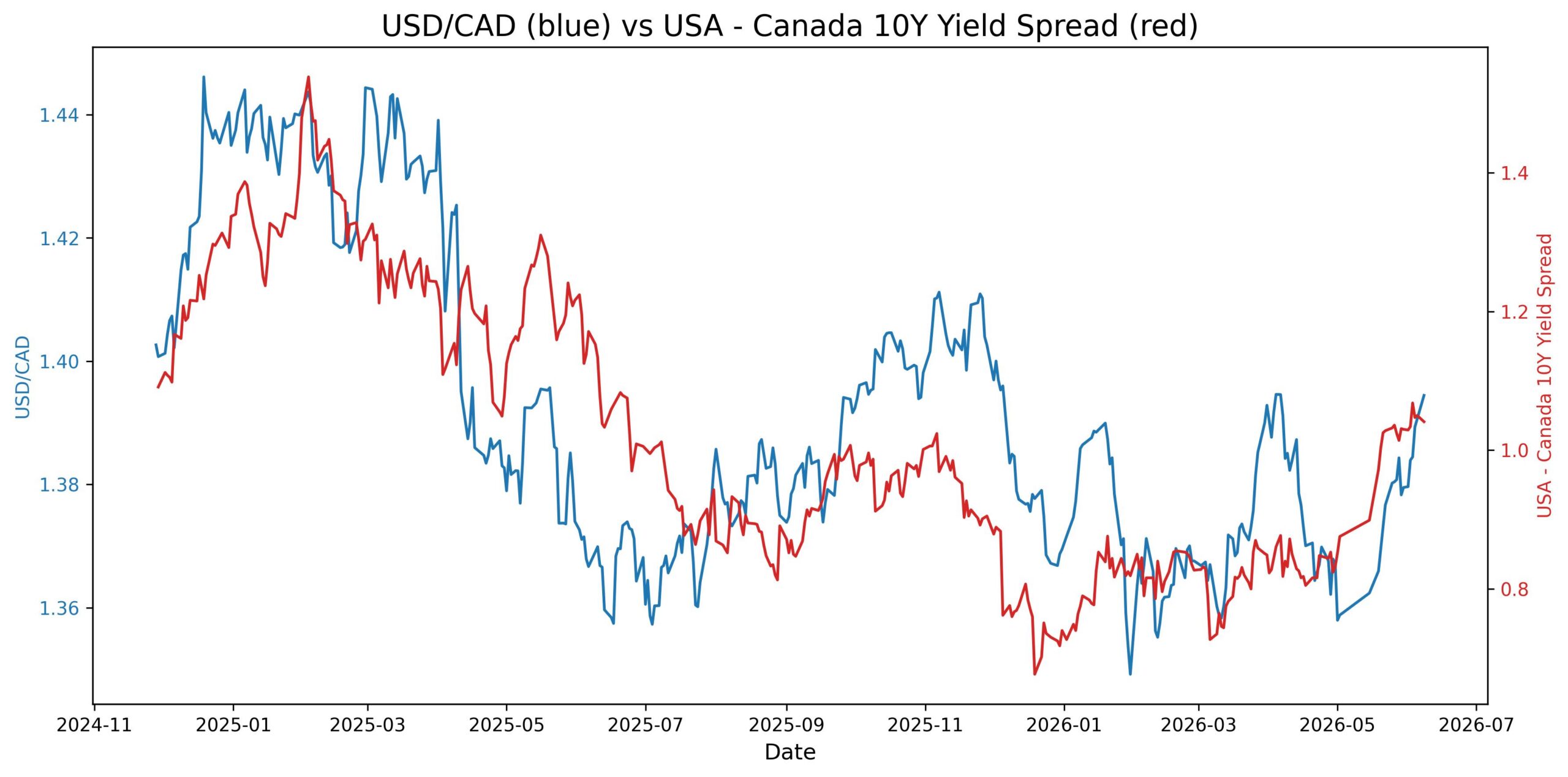
After the peak, both assets turned lower. By February 2026, USD/CAD dropped to around 1.3490, while the Macroflow Index fell to its low near 98.77. This simultaneous decline shows a return of closer correlation. The index’s drop reflects a narrowing U.S.-Canada yield spread (usd_10y_m_cad_10y falling) alongside a typical negative drag from rising gold and oil prices (both negatively correlated with the index). Indeed, Brent and gold rallied in early 2026, weighing on the Macroflow Index and aligning with a weaker USD/CAD.
In recent months (May-June 2026), USD/CAD has stabilized around 1.37-1.39, while the Macroflow Index has recovered slightly to the 99.6-99.8 area. This indicates a mild convergence – both are moving sideways after the previous downtrend. However, the pair still shows some independence: the index has risen faster than USD/CAD since February, hinting that macro factors (yields, commodities) are more supportive of a stronger CAD (lower USD/CAD) than the actual pair reflects.
**Key macro influences for the coming days:**
– **U.S. CPI data (June 10):** An inflation surprise could shift yield expectations. Higher CPI might boost the yield spread (positive for Macroflow Index) and initially lift USD/CAD, but the index’s negative correlation with gold and oil could temper the move.
– **BOC rate decision (June 10):** A hold at 2.25% is expected. Any dovish surprise (rate cut) would narrow yield spreads, weaken the index, and likely push USD/CAD higher. A hawkish hold would do the opposite.
– **UoM inflation expectations (June 12):** Elevated expectations reinforce Fed hawkishness, supportive for the yield spread and USD/CAD.
**Technical note on daily/weekly timeframe:**
USD/CAD has been oscillating between 1.37 and 1.39 since April. The pair remains below its 50-day moving average (around 1.3850), suggesting short-term bearish bias. A break above 1.3850 would signal a shift. The Macroflow Index, now at 99.65, is also near its 50-day average – confirming the indecision.
**Bottom line:** The pair and index have largely moved together since February, but recent divergences suggest traders should watch for breakouts. If the Macroflow Index pushes above 100 (driven by a wider yield spread and falling commodities), USD/CAD likely follows suit above 1.40. Conversely, a drop in the index below 99 would open the door for a test of 1.36 support.
COT Analysis
USD/CAD price continues its uptrend on the daily timeframe, rising from 1.37 to above 1.39 in recent weeks. However, the Asset Managers vs Dealers net position ratio (COT sentiment) has flattened around 0.159 after a strong rise, creating a bearish divergence. This lack of confirmation from smart money suggests the rally may be losing momentum, so traders should monitor for a potential pullback or range-bound action.
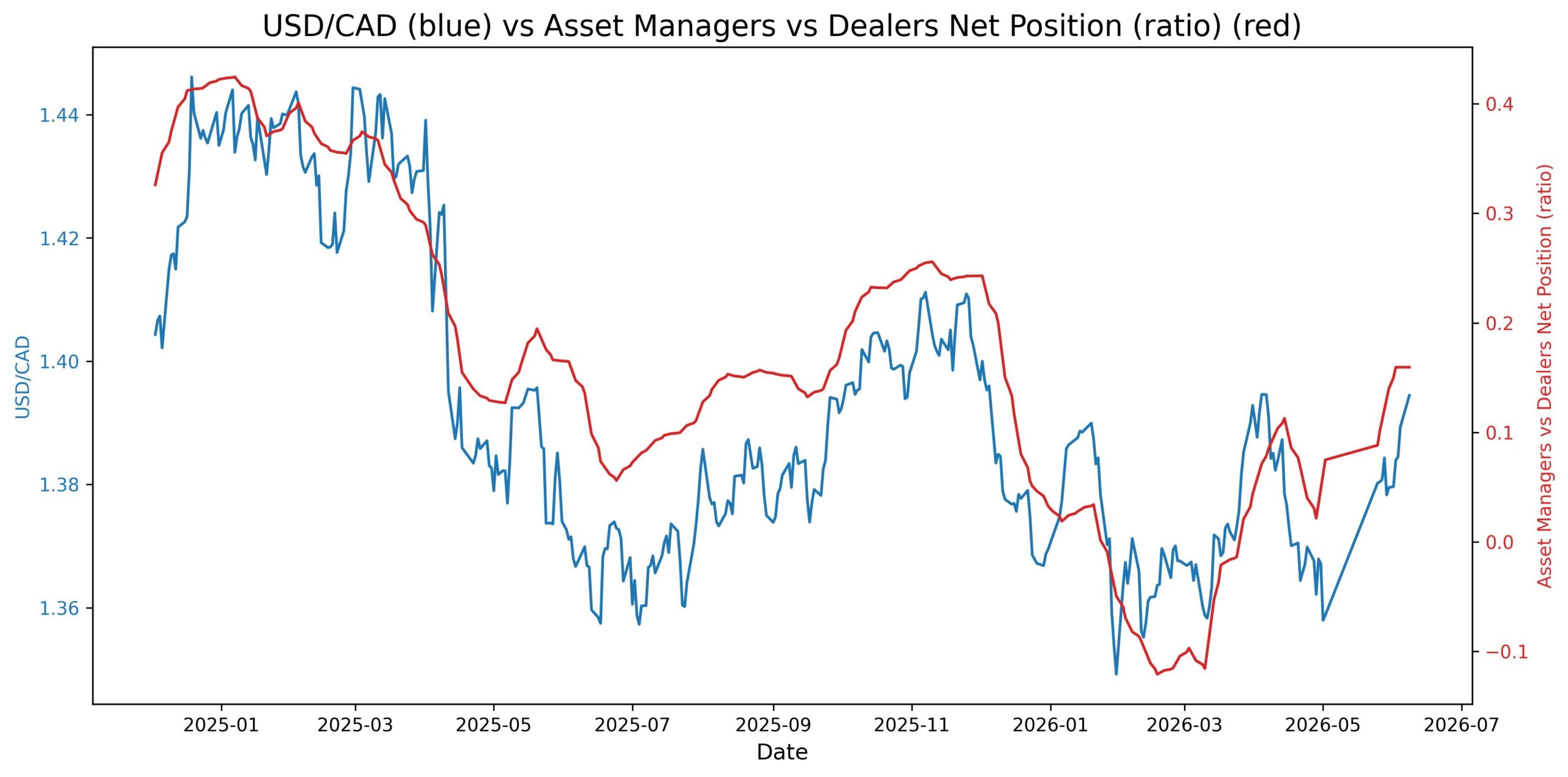
USD/CAD price and Asset Managers net position ratio show a clear convergence since early 2026, with both rising together. This alignment suggests institutional bullish sentiment supports the recent uptrend from the 1.36 area to above 1.39. In contrast, prior divergences—price climbing while the ratio fell in late 2025—preceded corrections. The current positive correlation reinforces the strength of the move on daily and weekly timeframes.
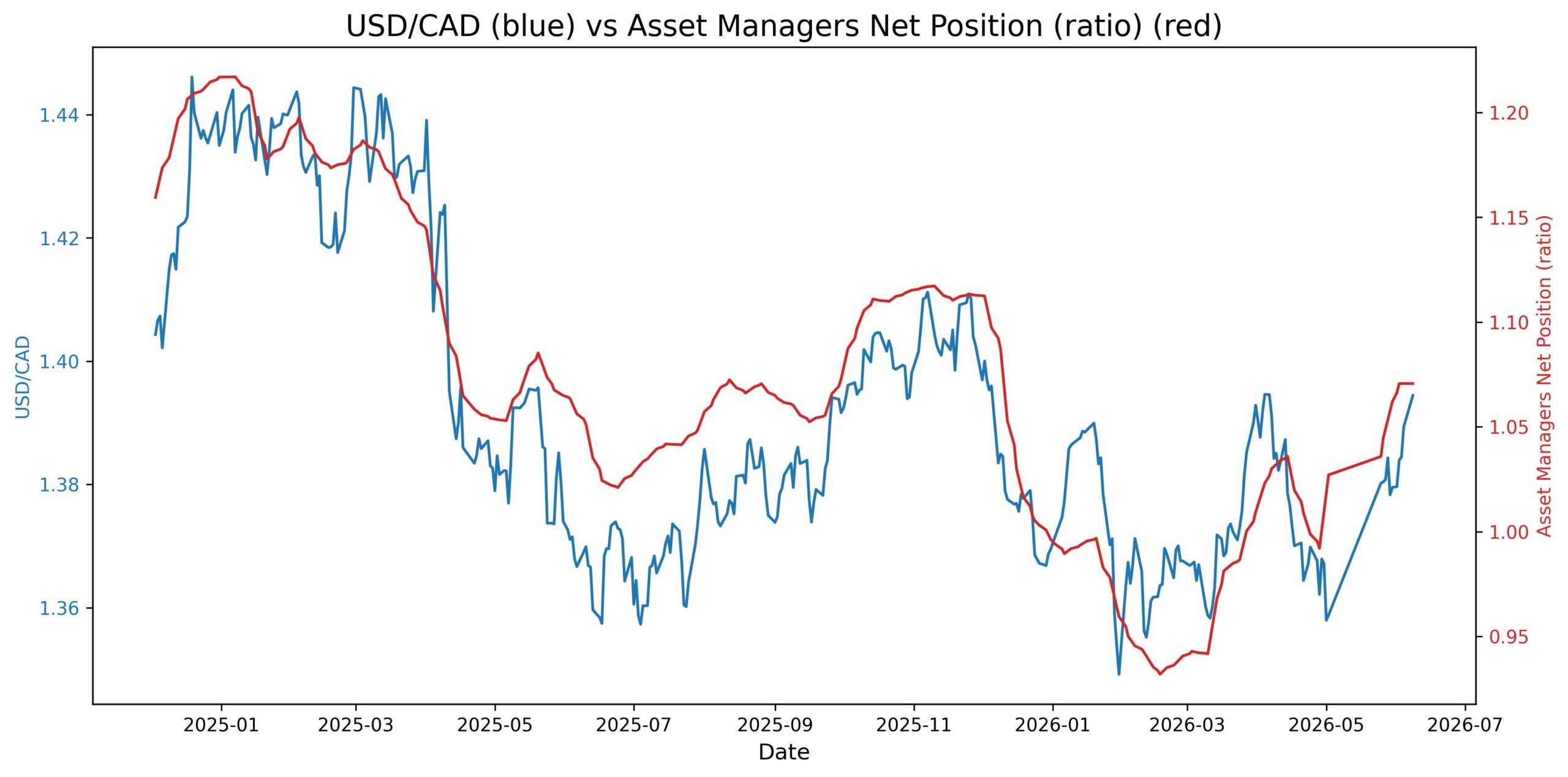
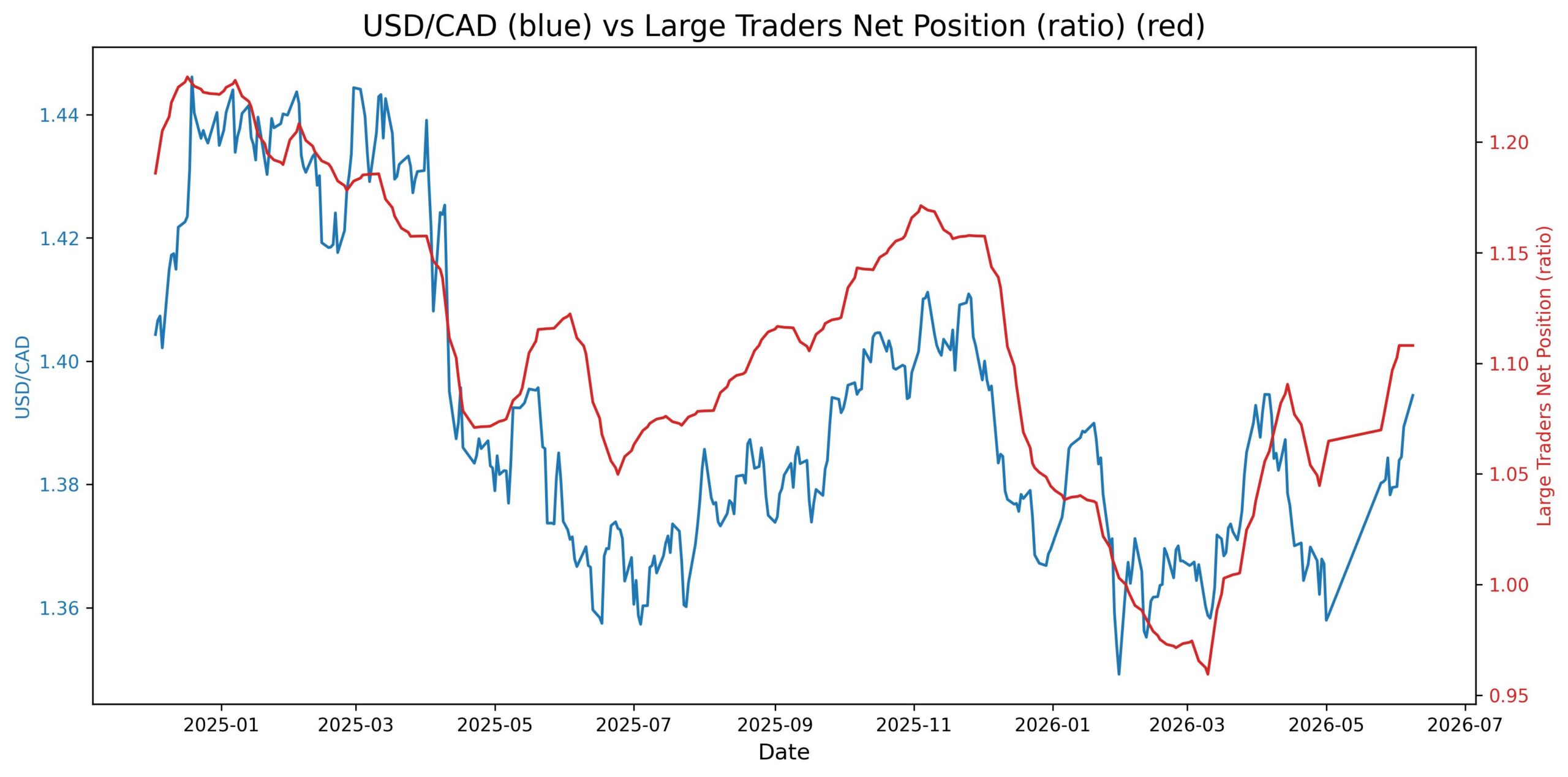
Recent price action in USD/CAD shows a clear uptrend from early June 2026, with the pair moving from 1.3796 to 1.3944. The Large Traders Net Position ratio has also risen sharply over the same period, from 1.1025 to 1.1080, confirming a bullish convergence between price and speculative sentiment. This alignment suggests that large speculators continue to support the USD bullish stance against the CAD. However, earlier this year we saw price hold steady while the ratio declined—a bearish divergence that preceded a subsequent price drop, so any future divergence could signal a potential shift.