Macro Analysis
GBP/USD Breaks Down Despite Widening Yield Spread: What Traders Need to Watch
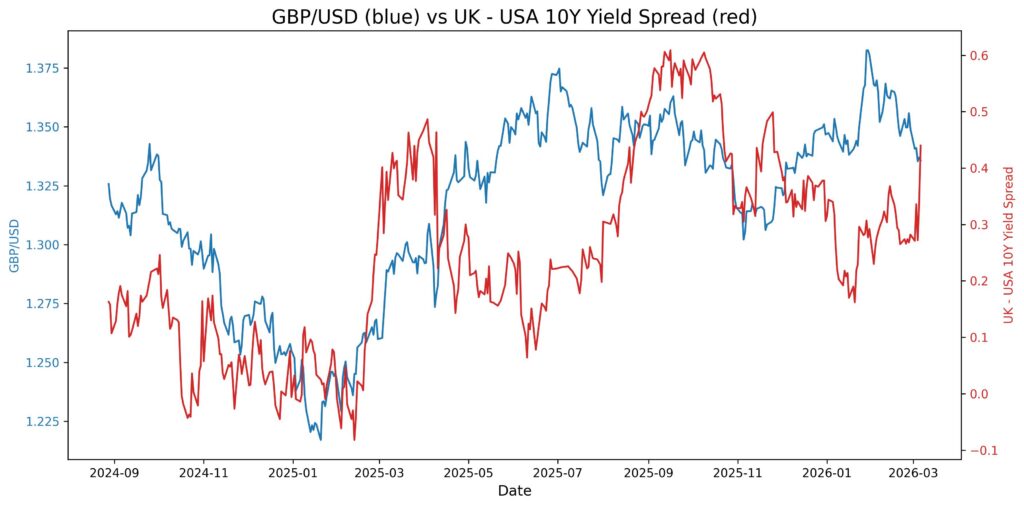
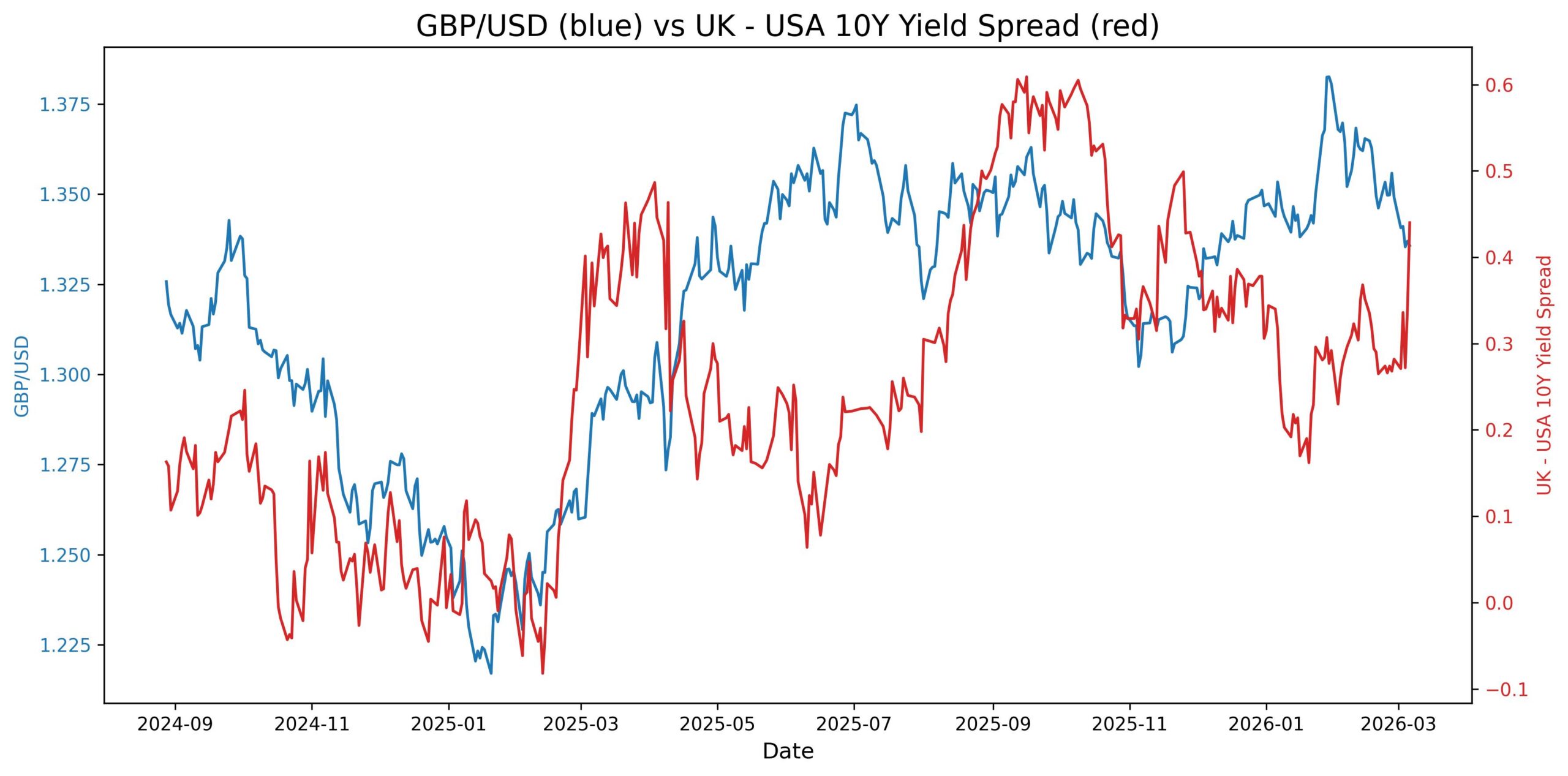
The GBP/USD pair shows a clear and significant divergence from its traditional macro driver. While the UK-US 10-year yield spread has risen sharply since late February, climbing from around 0.27% to a recent 0.44%, the currency pair has moved decisively lower. This breakdown of the historical positive correlation (0.31) is the key theme.
On the daily chart, GBP/USD failed to sustain a rally above 1.3825 in late January and has since formed a series of lower highs. The pair has now broken below a critical support zone around 1.3380-1.3400, which had held since mid-December. This technical breakdown opens the path for further weakness, with the next major support not evident until the 1.32 area from October-November 2025.
The recent price action suggests the market is currently prioritizing factors other than the yield spread. Persistent strength in the US dollar across the board, potentially driven by relative economic resilience or shifting Federal Reserve policy expectations, appears to be overwhelming the supportive rate differential. Traders should note that the yield spread itself has become volatile, which may be reducing its reliability as a short-term guide.
For the week ahead, high-impact US data including CPI and Core PCE inflation reports on March 11th and 13th will be crucial. Stronger-than-expected US inflation could further boost the USD, potentially extending the GBP/USD downtrend regardless of yield movements. Similarly, UK GDP data on March 13th will test Sterling’s resilience. The technical breakdown below 1.34 is now the primary focus for daily timeframe traders, with any rally back above that level needed to question the current bearish momentum.
COT Analysis
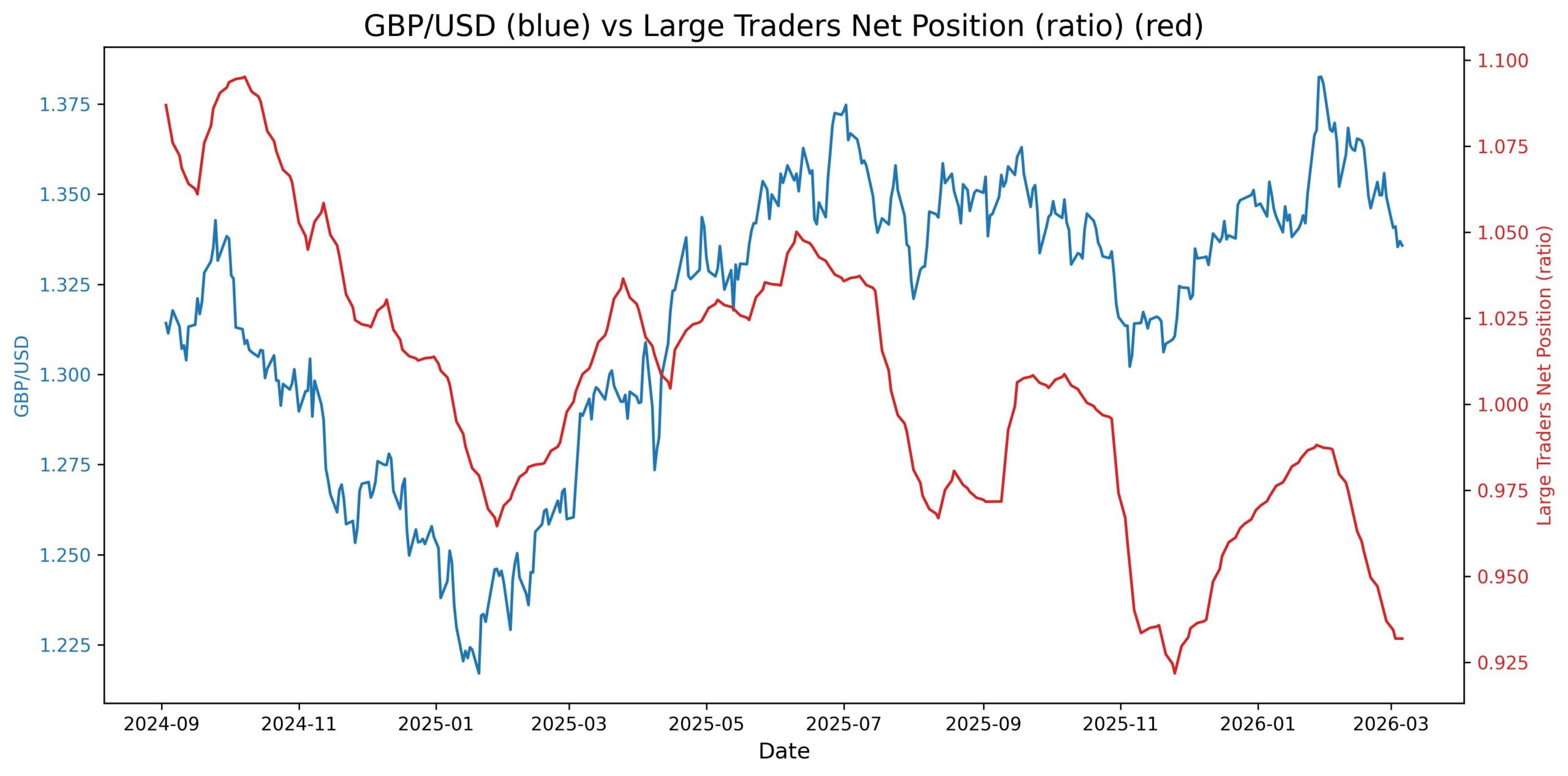
GBP/USD has been in a sustained downtrend on the daily chart, with the price falling from around 1.38 in late January to near 1.33. This decline shows a clear convergence with the falling COT Large Traders Net Position, which has steadily decreased from above 1.0 to approximately 0.93. The consistent drop in this sentiment indicator suggests large institutional traders have been reducing their net bullish exposure throughout the price decline, reinforcing the selling pressure. There is no observable divergence between price and the COT data, indicating aligned bearish momentum.
GBP/USD has been in a broad downtrend from above 1.37 to near 1.33 on the daily chart. This decline has coincided with a sustained and significant shift in the COT data, where the Asset Managers vs Dealers net position ratio has moved from positive into deeply negative territory. This represents a clear divergence, as the price made lower highs while institutional sentiment turned increasingly bearish. The current correlation shows strong selling pressure from asset managers aligning with the pair’s downward momentum.
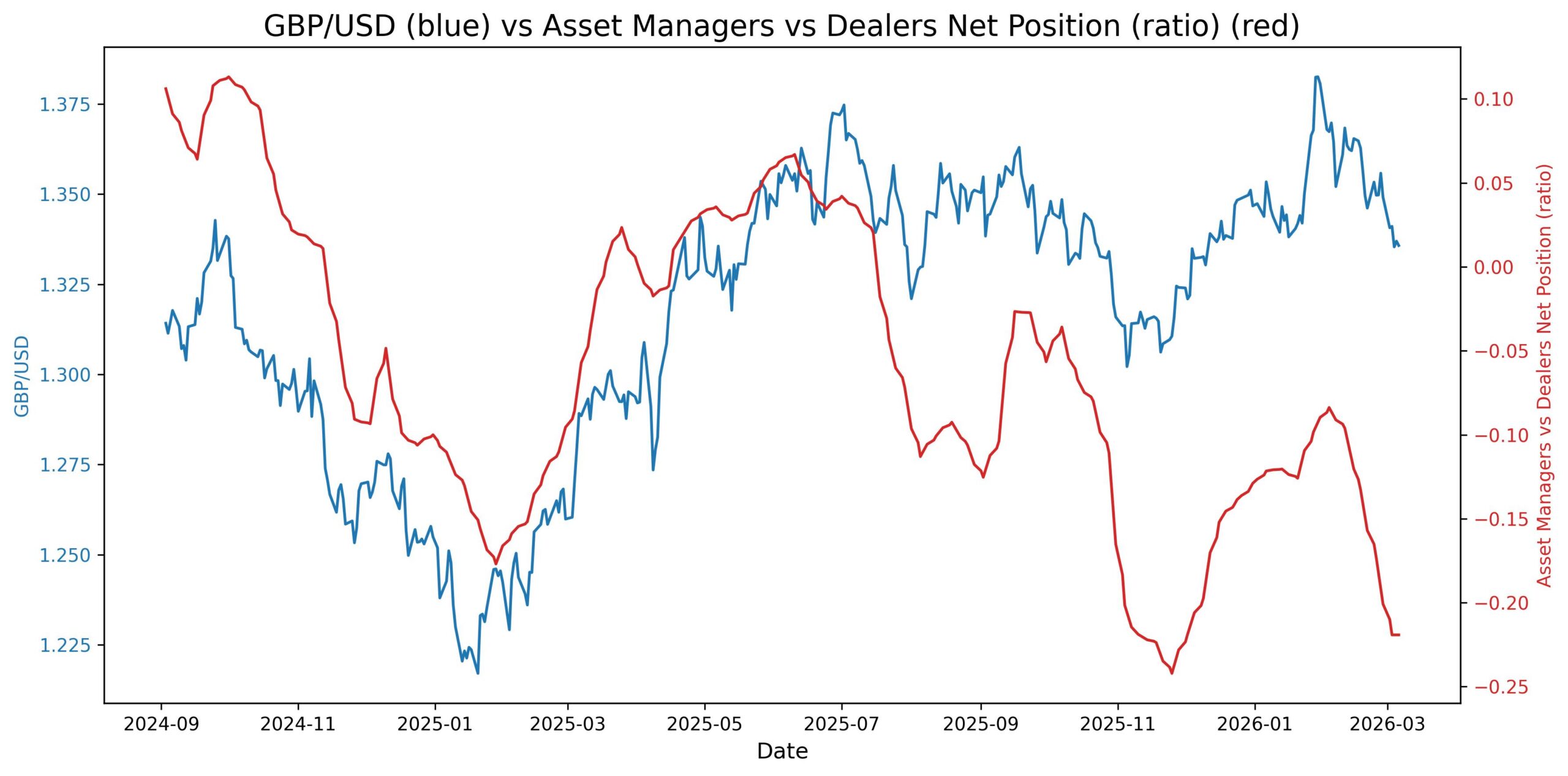
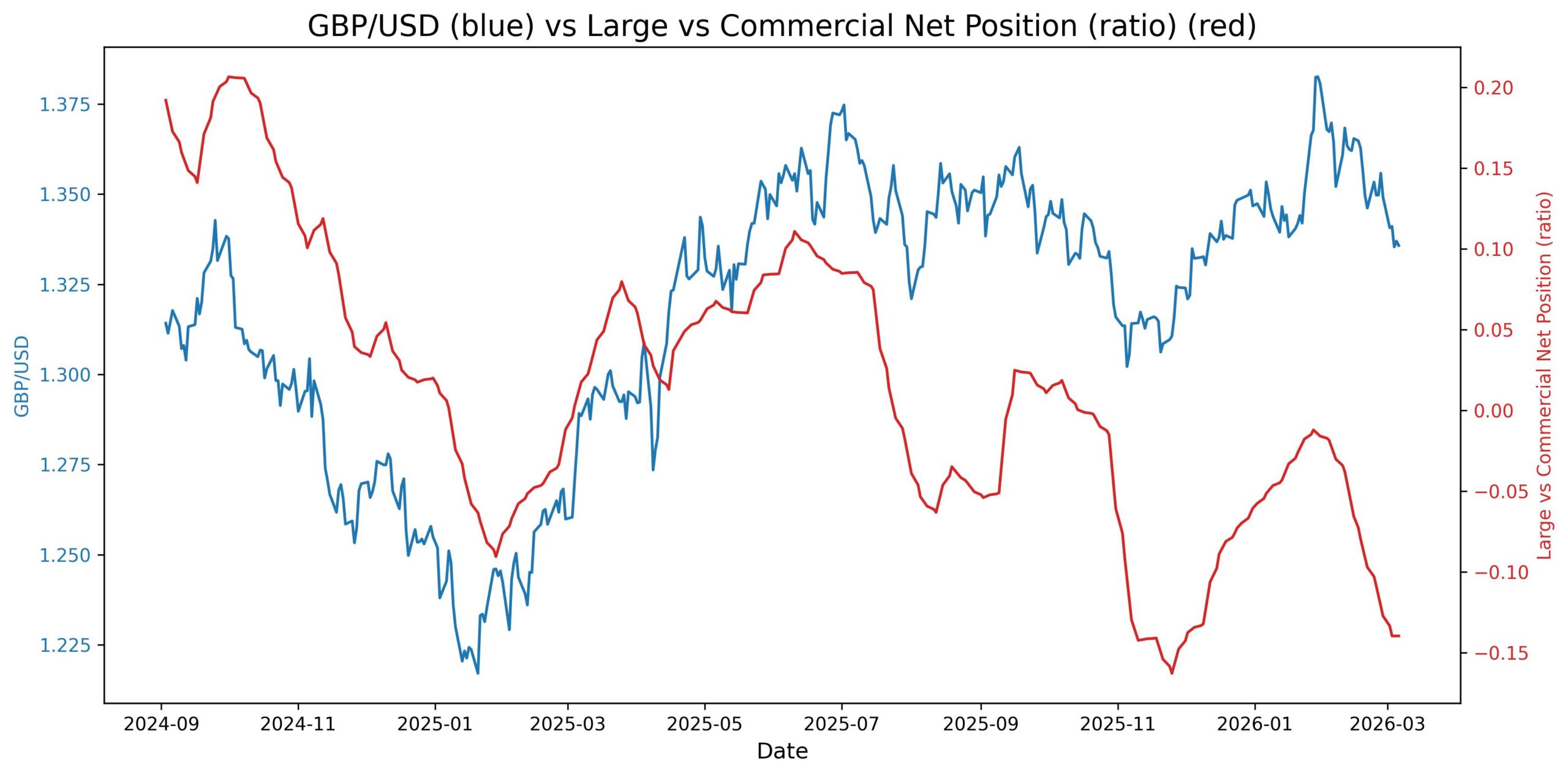
GBP/USD has been in a sustained downtrend on the daily chart since its peak near 1.382 in late January 2026, recently trading near 1.335. Throughout this decline, the COT data shows a significant and growing net short position from commercial traders, indicating strong selling pressure from institutional players. This alignment between falling prices and increasing commercial shorts suggests the bearish trend has underlying conviction from large market participants. The pair’s price action and this sentiment indicator have been in clear convergence, both reflecting a dominant bearish environment.