Macro Analysis
### NZD/USD Dives as Yield Spread Turns Negative – Watch for Key US Data
Price Action Breakdown
NZD/USD keeps sliding. From late May near 0.5960, the pair dropped to 0.5711 by June 23. That’s a steady decline, with no meaningful bounce. The daily chart shows lower highs and lower lows. Current price hovers around 0.5735, testing the 0.5700 support zone. If that breaks, the next floor sits near 0.5600.
Yield Spread Relationship – Weak but Worth Noting
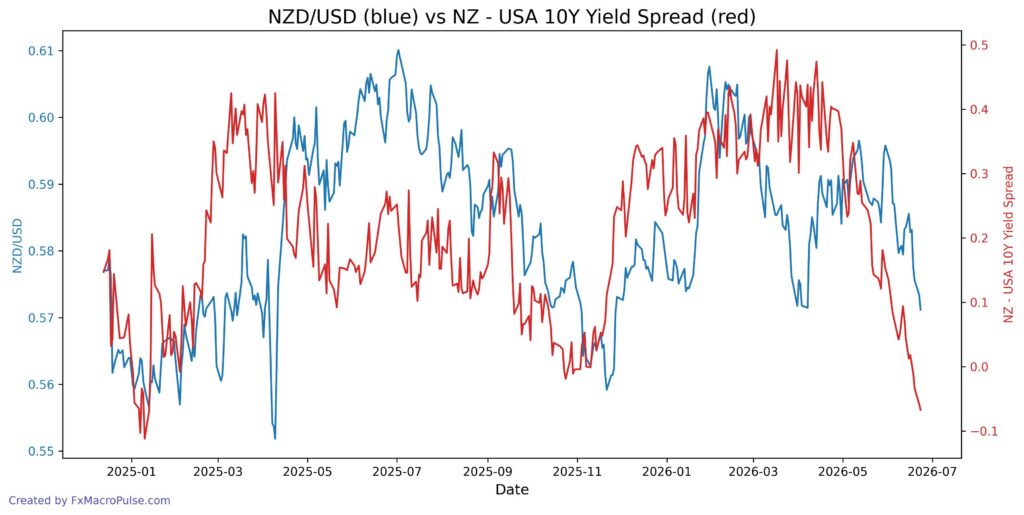
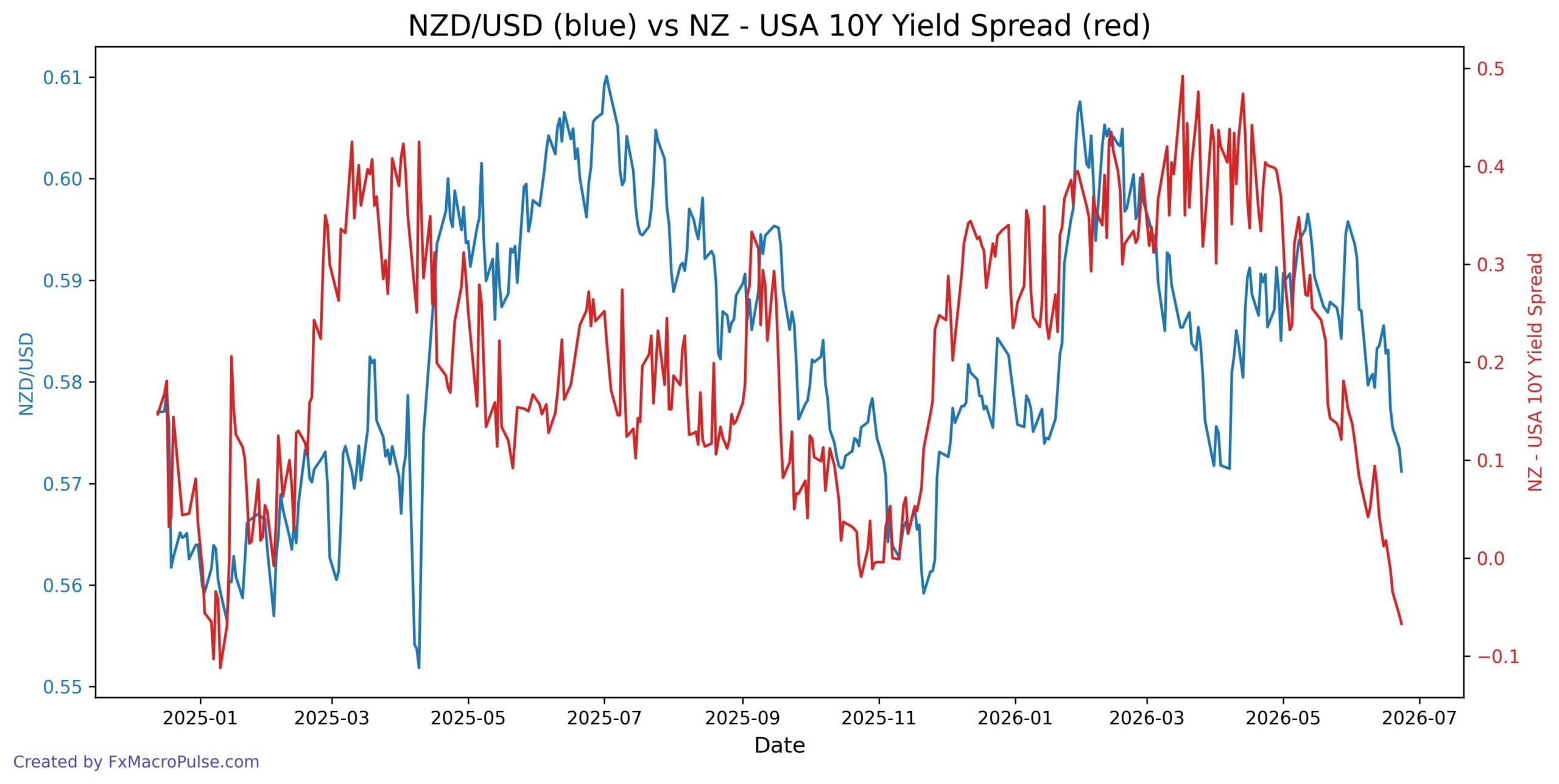
The NZ-US 10-year yield spread turned negative on June 18. It now sits at -0.067. Historically, the correlation between the pair and the spread is only 0.09 – very low. So don’t expect a tight relationship. Still, recent weeks show both the pair and the spread moving lower together. That’s a mild convergence. When the spread turns negative, it means New Zealand yields are below US yields. That traditionally discourages Kiwi demand, but the low correlation says other factors (like risk appetite and commodity prices) matter more.
Key Macro Drivers This Week
Two high-impact US releases hit on June 25:
– Core PCE Price Index m/m – forecast 0.3% vs previous 0.2%. A hotter print would boost USD and pressure NZD/USD further.
– Final GDP q/q – steady at 1.6%. No surprise expected.
These reports dominate the short-term. The market also watches US consumer sentiment on June 26, but the inflation expectations component is the focus.
What to Watch on Daily/Weekly Timeframes
– Support: 0.5700 is the immediate line. A daily close below it opens the door to 0.5600.
– Resistance: The 0.5800 area caps upside. Price bounced from 0.5711 but failed to hold above 0.5760.
– Oversold? The RSI on daily is around 35 – approaching oversold but not extreme yet. A sharp reversal requires a catalyst, like a weaker-than-expected PCE print.
Bottom Line
NZD/USD remains in a clear bearish trend. The yield spread turning negative aligns with the downtrend, but its low correlation means you should not trade solely on that. Focus on the upcoming US inflation data – it will likely decide if 0.5700 holds or breaks. For now, sellers control the market.
COT Analysis
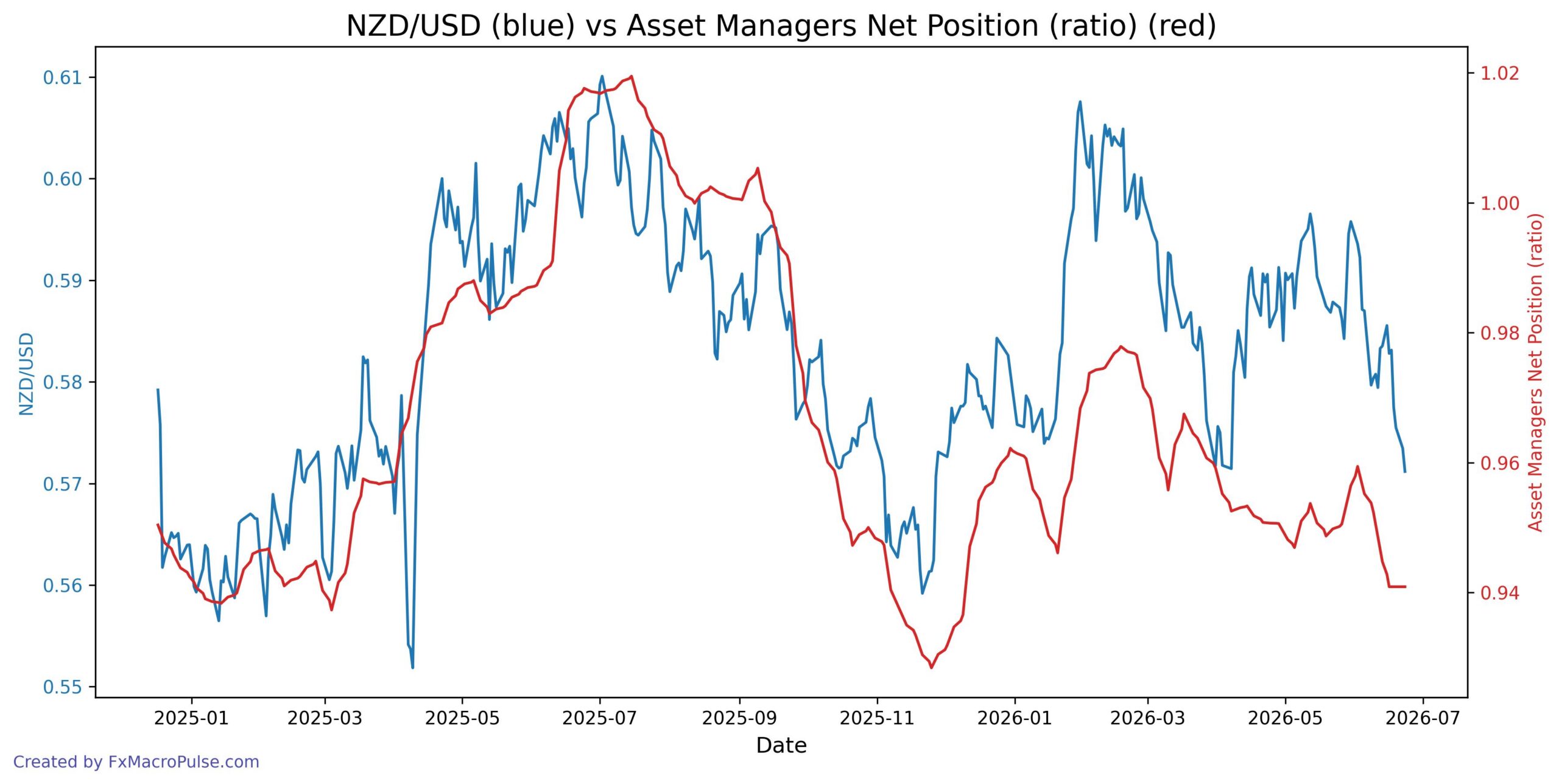
NZD/USD price declined from 0.59 in April 2026 to 0.571 by late June, while the Asset Managers Net Position ratio flattened near 0.941 after falling steadily since early 2026. This creates a bullish divergence: the COT ratio stops dropping even as price makes new lows, suggesting selling pressure may be easing. On the daily timeframe, the price remains in a downtrend, but the flattening ratio signals that large speculators are not increasing their net short exposure further.
From the data, NZD/USD shows a notable divergence with the COT sentiment indicator. Since mid-2025, the asset manager vs dealer spread has turned increasingly negative, signaling bearish sentiment, yet price has only moved sideways within a 0.55-0.61 range. This divergence suggests that while smart money is aggressively short, price refuses to break lower, hinting at underlying strength or a potential reversal setup. Traders should watch for a clear break below 0.57 to confirm bearish momentum, or a rally above 0.60 to invalidate the negative sentiment.
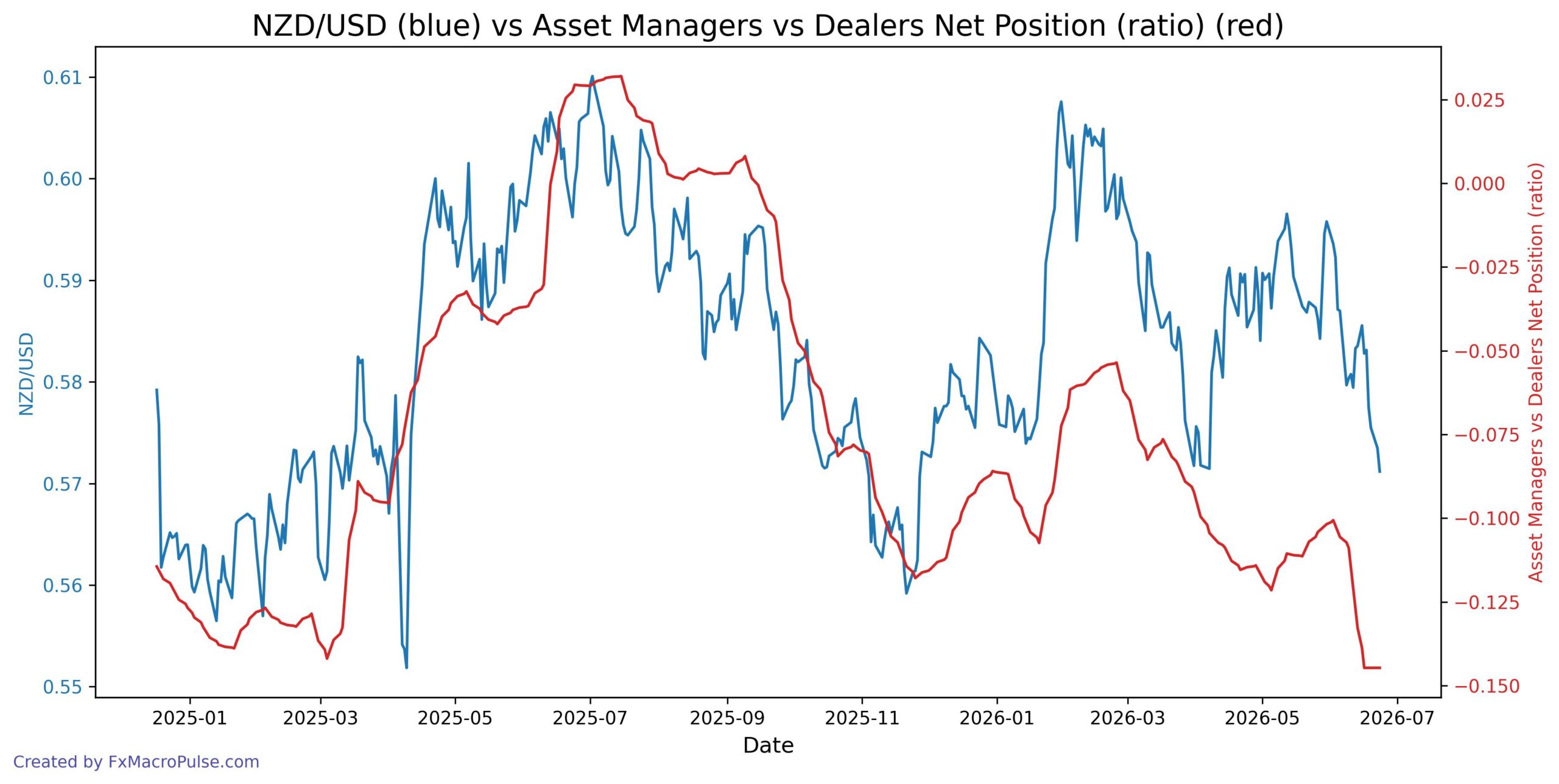
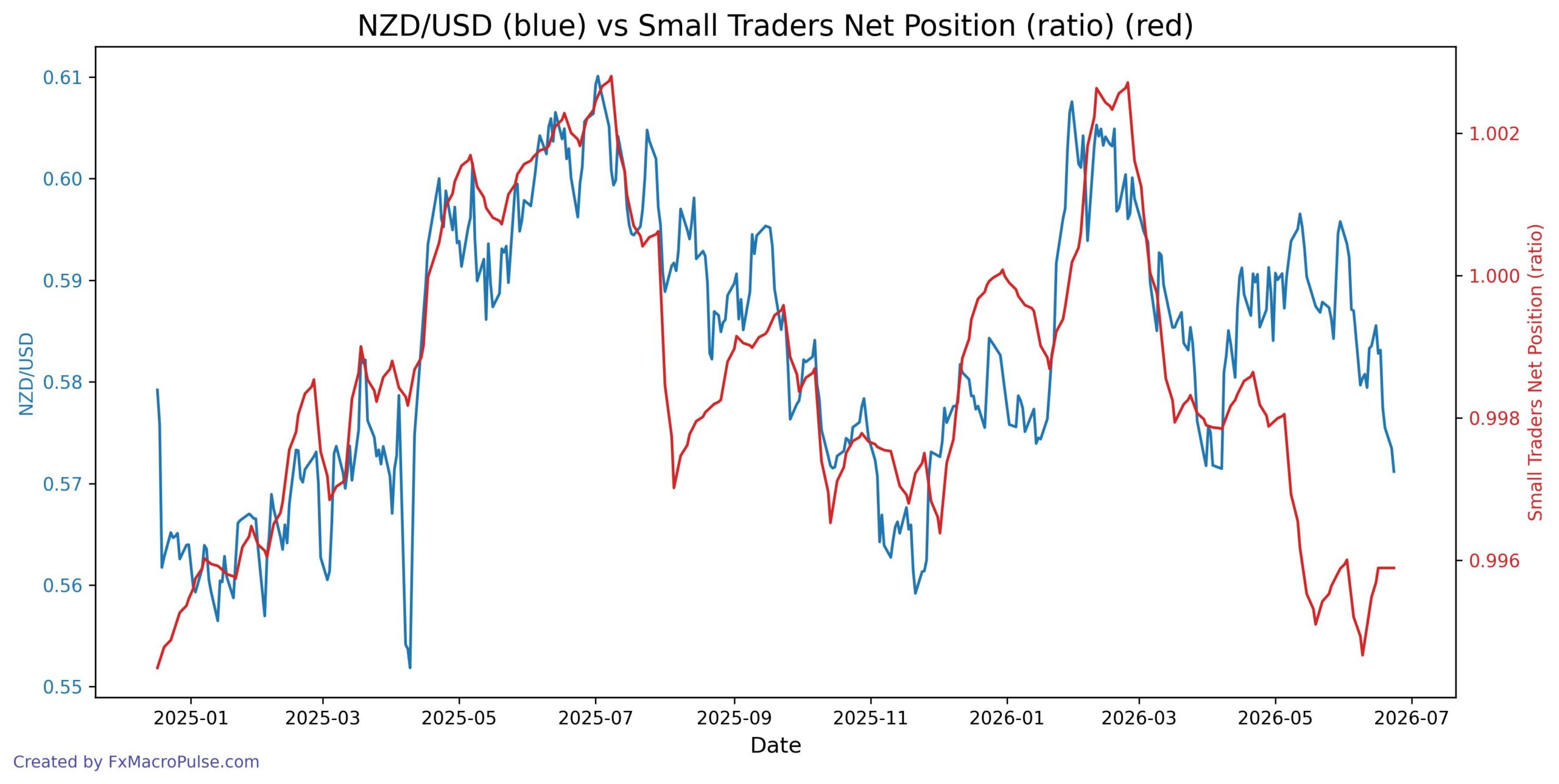
NZD/USD has been declining since early 2026, breaking below the 0.58 support zone, while the Small Traders Net Position ratio fell from above 1.00 to below 0.996, showing small traders turned net short and confirming the bearish move. This convergence between falling price and falling ratio aligns with the weakening Kiwi, driven by risk-off sentiment and expectations of further RBNZ easing. The pair now tests the 0.57-0.56 range, a prior demand area, with momentum favoring sellers as long as the ratio stays below parity.