Macro Analysis
**NZD/USD Diverges from Yields – What the Low Correlation Tells Us Right Now**
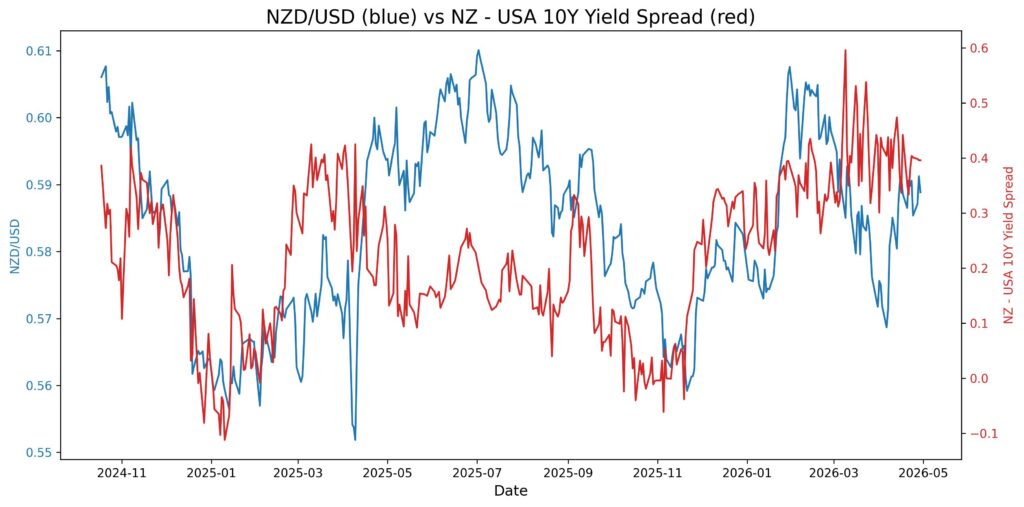
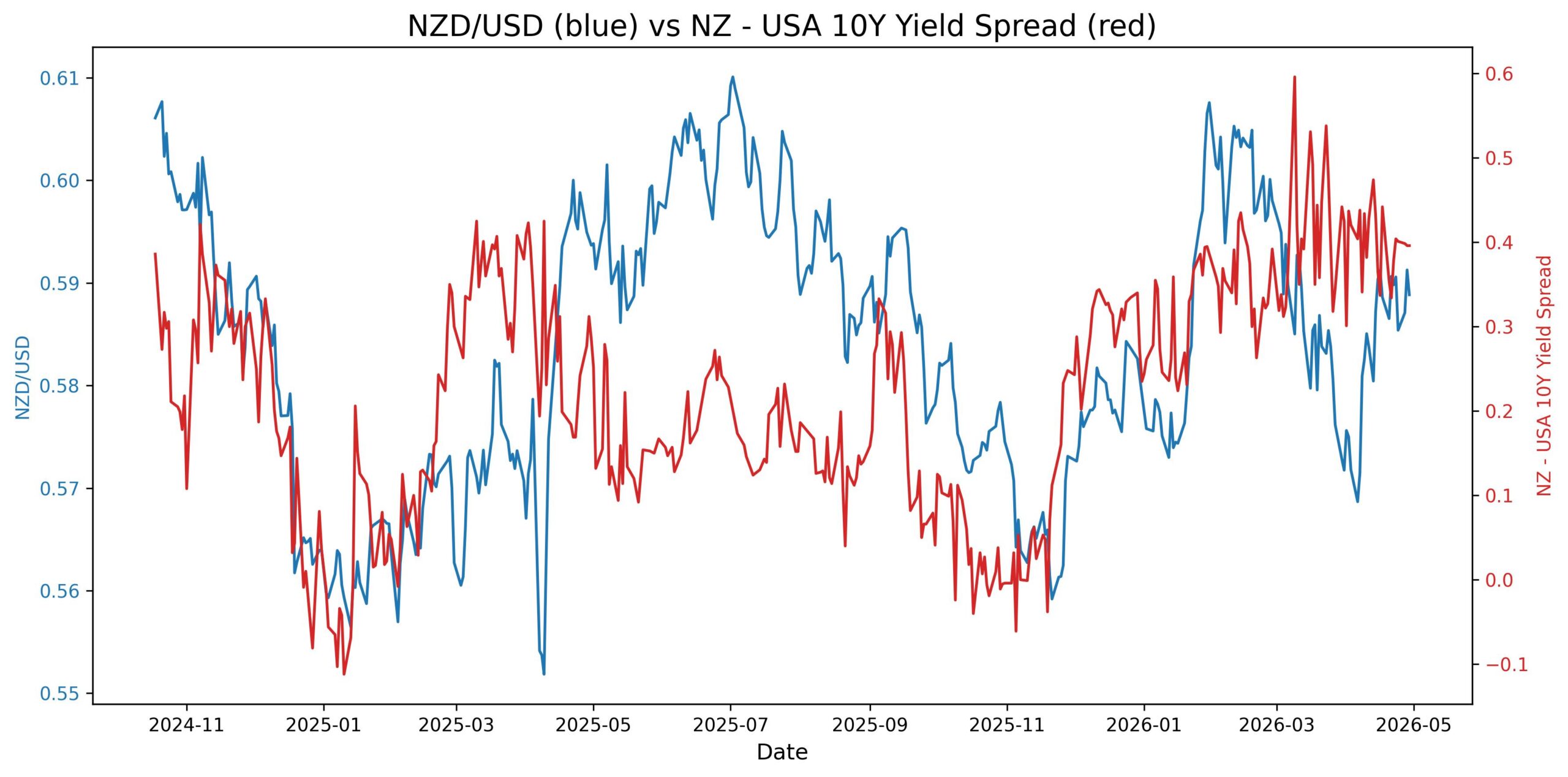
NZD/USD currently trades near 0.5888, while the NZ-US 10-year yield spread sits at 0.396%. Over the past few months, these two have moved in opposite directions. Since mid-March, the Kiwi rallied from 0.572 to 0.593, but the yield spread actually narrowed from 0.6 down to 0.4. That is a clear divergence on the daily chart.
With a historical correlation of just 0.10, the pair rarely follows yield moves closely. Right now, price action tells a more important story than macro spreads. On the daily timeframe, NZD/USD rebounded from the 0.57 zone but stalled near 0.60 – a key resistance level since early 2026. The recent pullback from that area suggests sellers still defend it.
Looking at the weekly timeframe, the pair remains trapped in a broad 0.55–0.61 range. The yield spread is no longer a reliable guide here. Instead, focus on the upcoming high-impact US data: Advance GDP (forecast 2.2% vs previous 1.4%), Core PCE (0.3% m/m), and Employment Cost Index (0.8% q/q). A strong US print could push the dollar higher, testing the lower end of the range.
Traders should watch for a break below 0.579 (recent swing low) to confirm a downside bias, or a close above 0.596 to challenge the 0.60 resistance. The yield spread divergence simply confirms that other drivers – risk sentiment, commodity prices, and US fundamentals – are in control now.
COT Analysis
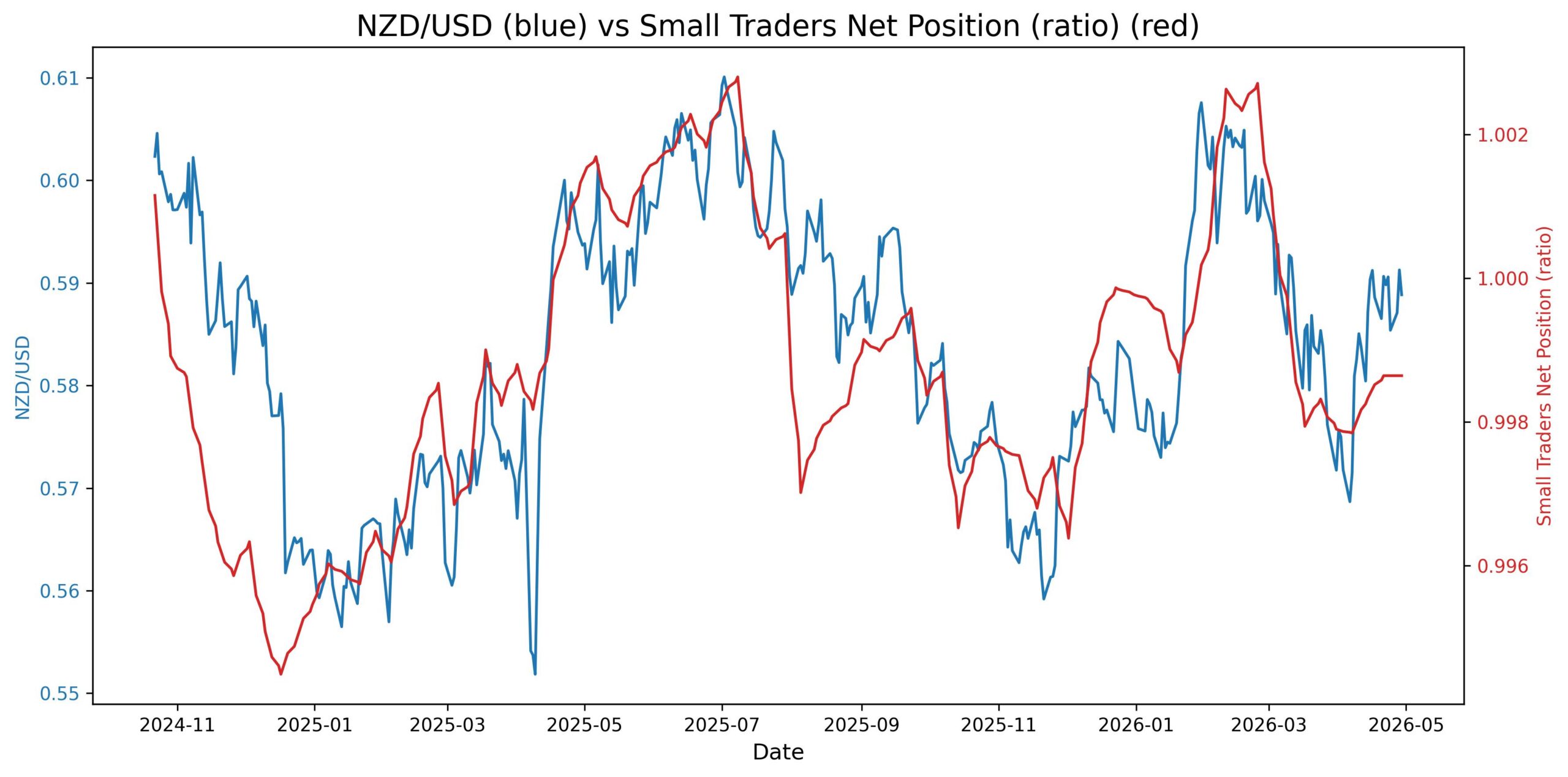
NZD/USD has moved lower from the 0.60 area in early 2026 to around 0.585–0.590 recently, while the Small Traders Net Position ratio has fallen from above 1.00 (bullish) to below 0.999 (neutral-to-bearish). This downward convergence confirms weakening bullish sentiment among small traders as price dropped. No clear divergence appears; the two indicators align closely in recent weeks.
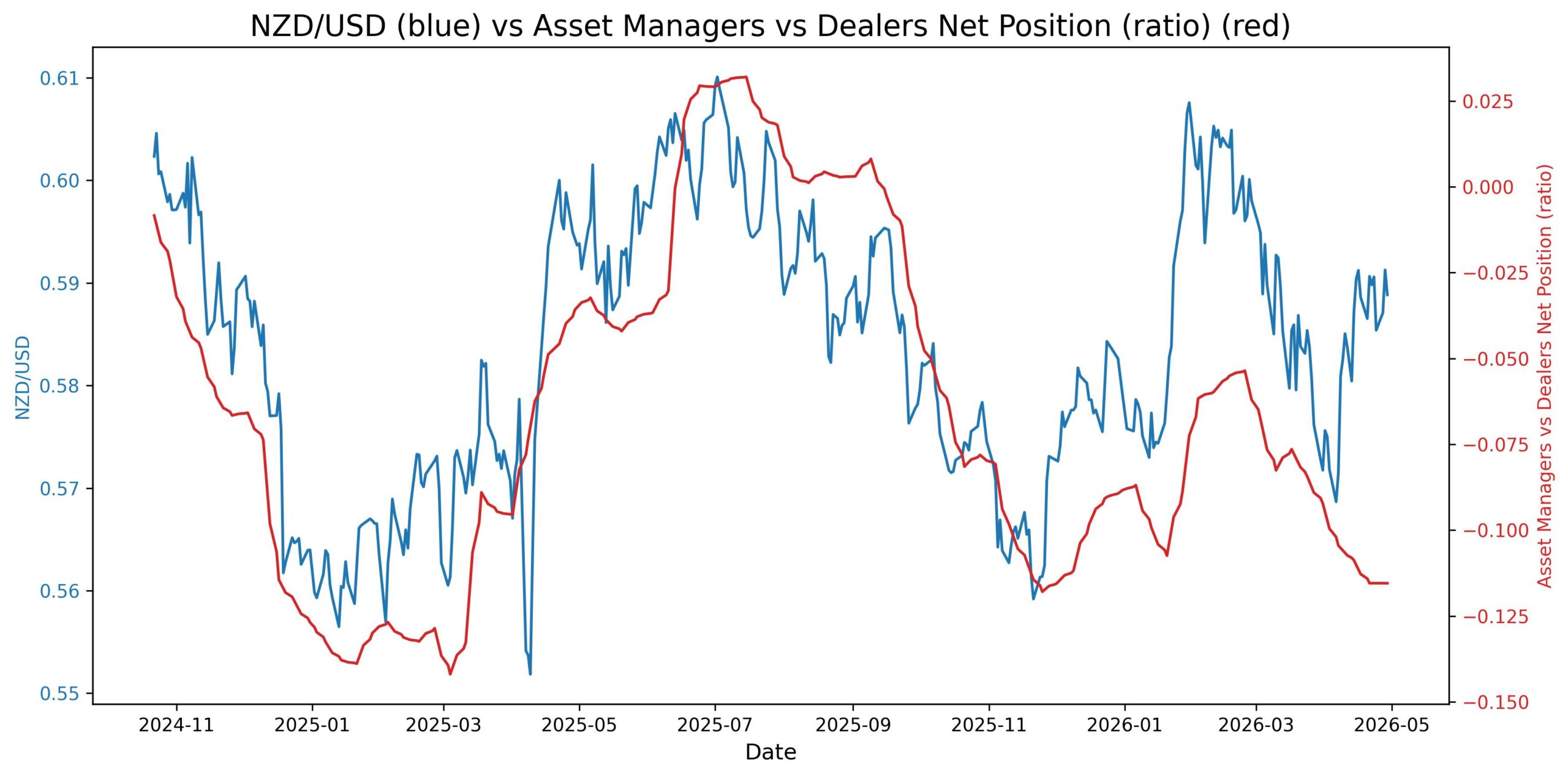
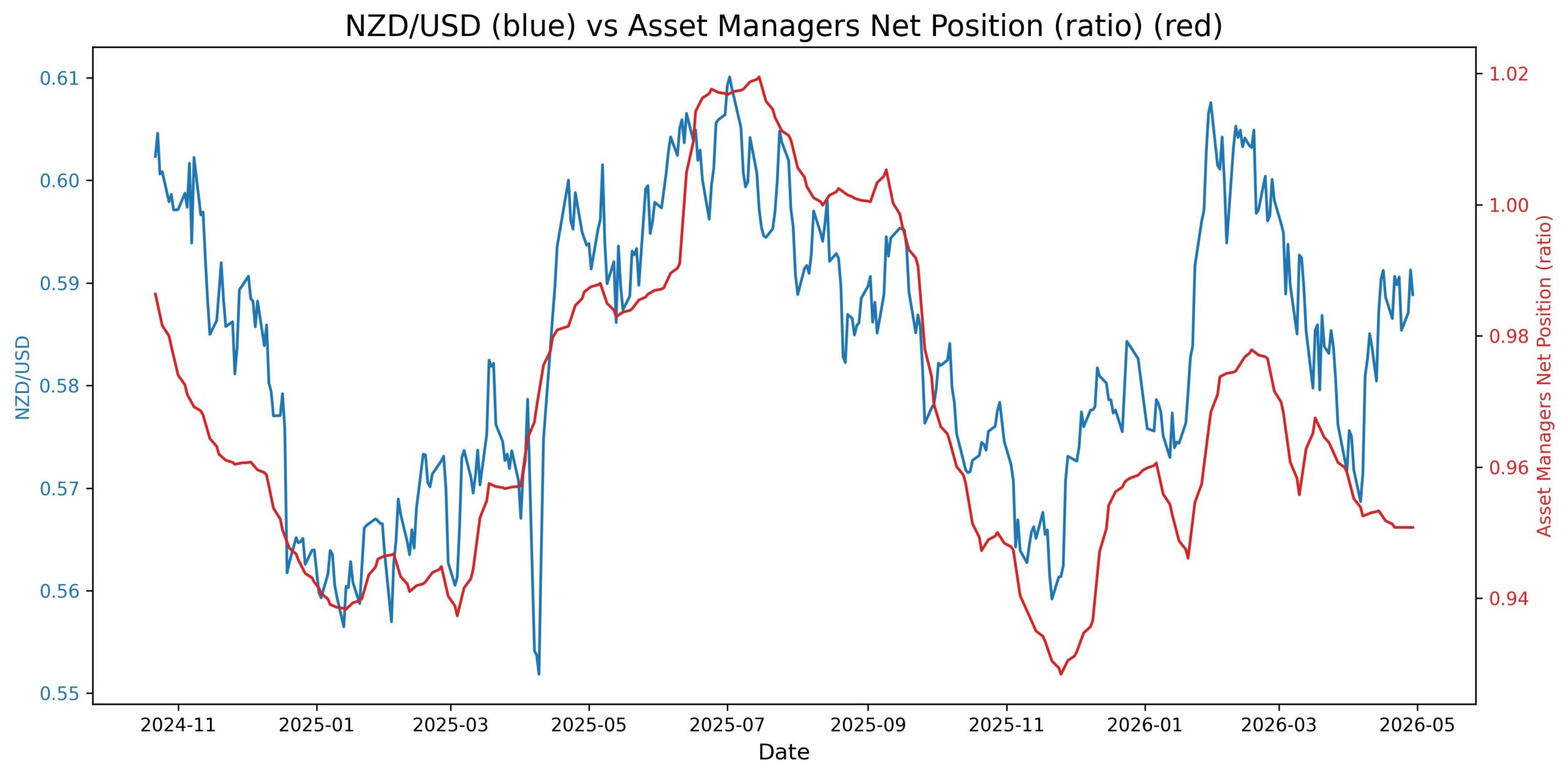
Recent daily price shows NZD/USD oscillating near 0.585-0.59, while the Asset Managers ratio stabilizes around 0.951 after a prolonged decline from above 1.01 in mid-2025. This creates a bearish divergence: price made a higher high near 0.607 in late January 2026, but the ratio continued lower during that period, indicating weakening bullish sentiment from smart money. The flat ratio now suggests lack of strong conviction from asset managers, aligning with the sideways price action. Traders should watch for a break of recent support or resistance to confirm the next directional move.
The COT data shows a bearish divergence: NZD/USD recovered from the 0.56 area to above 0.60 by mid-2025, yet the Asset Manager vs Dealer spread turned sharply negative, signaling institutions increased their net short positions. Since late 2025, the spread remains deeply negative despite price consolidating around 0.58–0.59, suggesting persistent selling pressure. This makes the daily price action vulnerable to further declines.